How Long Do Cigars Last? Shelf Life in the Humidor, on the Shelf, and at Home
Key Takeaways
- Premium cigars don't have an expiry date. Kept at Lucrative's recommended 65-70% humidity and 65-70°F, they can remain in good condition for years.
- What cuts a cigar's life short is storage that fails: drying out, mold, or tobacco beetles. Time on its own is rarely the problem.
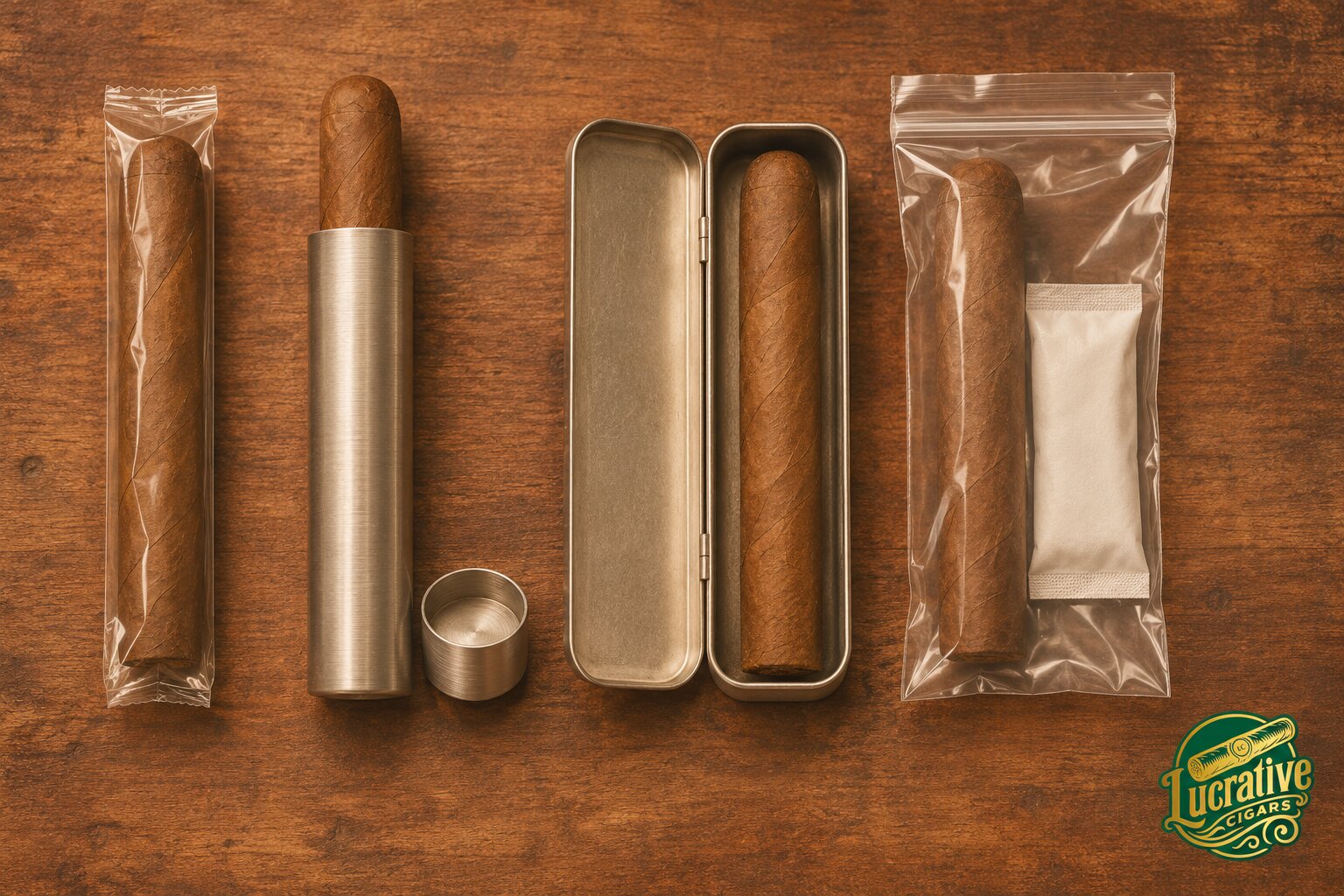
- Outside a humidor, the clock runs much faster. Cellophane is semi-porous, and tubes and tins slow moisture loss without stopping it.
- For a store, the real shelf-life risk is the box nobody touches. Date every box when it arrives and sell the oldest first.
- Give customers a straight answer at the counter. A humidor keeps cigars for the long term; anything else is short-term unless the cigars are sealed in with a humidity pack.
A customer buying a box as a gift asks how long the cigars will keep. In the back room, there's a box that arrived last spring and still hasn't sold.
Both questions have the same answer. It depends far more on how the cigars are kept than on how old they are. Premium cigars don't go off on a date the way food does. They go off when storage fails.
Here's what that means for your humidor, your slow sellers, and what you tell customers.
Do cigars expire?
No. There's no expiry date on a box of premium cigars, and a well-kept cigar can stay in good condition for years. Lucrative's own guide to storing wholesale cigars makes the same point: condition matters far more than age.
Some smokers even keep cigars for years on purpose, because they like how the flavor settles. That only works when the storage stays steady the whole time.
What actually ends a cigar's life is one of a handful of problems:
Drying out. The wrapper gets brittle and cracks, and the cigar burns hot and fast.
Mold. Too much humidity or warmth, and fungus grows on the wrapper.
Tobacco beetles. A warm humidor lets them breed, and they bore holes through the cigars. The tobacco beetle guide covers prevention.
Damage. Crushed or split cigars from rough handling or a bad fit in the box.
All four come down to storage and handling. None of them is about the calendar.
How long cigars last in different conditions
Where the cigar is | How long it keeps | What to tell the customer |
A humidor at 65 to 70% | Years | Long term, as long as the humidor is looked after |
A sealed bag or box with a fresh humidity pack | Longer than unprotected | A good stopgap; replace the pack about every three months |
A tube or tin | Short term | Slows moisture loss but doesn't stop it |
Cellophane | Short term | Semi-porous, so not real protection |
Loose, in a pocket or a car | Not long | Get it into proper storage the same day |
You'll notice there are no day counts for the short-term rows. There's no reliable figure, because it depends on the room. A dry, heated room or a hot car takes moisture out far faster than a cool, humid one. The safe advice is to get cigars into proper storage within a few days.
Aging stock and forgotten stock aren't the same thing
A box that has sat well for a year in a steady humidor isn't a problem. Some shops make a feature of it: older, limited-edition cigars can sell at a premium to the right customer, and the limited-release cigars guide covers how to stock them.
The problem is the box at the bottom of the cabinet that nobody has opened since it arrived. It may be fine. It may also have dried out, picked up mold, or hidden a beetle problem for months. You don't know.
So the test for any older box is simple. Has someone opened it, looked at it, and pressed a few cigars lately? If not, do it now.
Keeping slow-moving stock fresh
- Date every box when it arrives. A marker on the end or the bottom is enough.
- Sell the oldest first. Put new deliveries behind or under the boxes already on the shelf.
- Check slow sellers every month. Open any box that hasn't moved, press a few cigars, and look at the wrappers.
- Give slow lines a push. Move them to eye level, sell them as singles, or put them into samplers. Sampler packs are also an easy way to test a new line before committing to boxes.
- Order slow lines in smaller quantities. There's no reason to sit on three boxes of something that sells one a month. See flexible wholesale ordering for how that works with Lucrative.
What to tell customers at the counter
Customers ask this all the time, and a clear answer builds trust.
If they have a humidor: the cigars will keep for the long term, as long as the humidor stays at 65 to 70%. Lucrative's FAQ states that it's generally better to remove the cellophane for long-term storage, though leaving it on for a day or two is fine.
If they don't, it's short-term. Suggest a sealed bag or container with a humidity pack, and tell them to replace the pack about every three months. Lucrative's Boveda 60 gram packs come in boxes of 12, the size most customers buy.
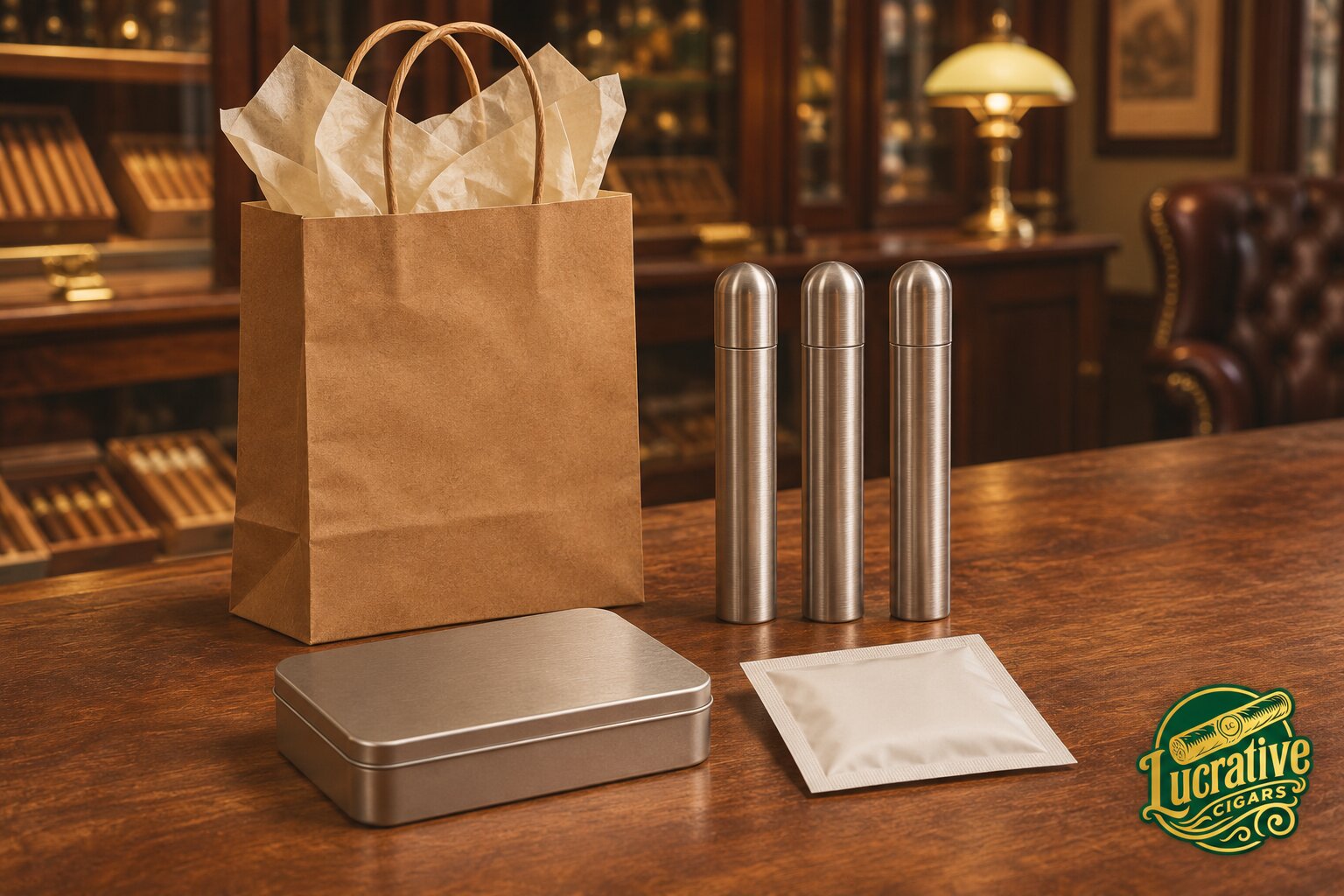
If it's a gift: ask whether the person has a humidor. If not, cigars in tubes or tins, with a humidity pack, will hold up better on the way than a loose box.
The short version
Premium cigars don't expire. In a humidor kept at 65 to 70% humidity and 65 to 70°F, they can last for years. What shortens their life is storage that fails. Outside a humidor, cellophane, tubes, and tins only buy time.
For a store, the risk is the forgotten box. Date every delivery and sell the oldest first. Open any slow seller once a month. Give customers a straight answer and the right accessories to go with it. When you're ready to restock, apply for a wholesale account with Lucrative Cigars.
Frequently asked questions
Do cigars expire?
No. Premium cigars have no expiry date, and stored at a steady 65 to 70% humidity and 65 to 70°F, they can stay in good condition for years. Drying out, mold, and tobacco beetles are what ruin them, and all three come down to storage.
How long do cigars last without a humidor?
Not long, and it depends on the room. A dry, heated room or a hot car dries cigars out much faster than a cool, humid space. A sealed bag with a fresh humidity pack buys more time, but a humidor is the only long-term answer.
How long do cigars last in their plastic wrapper?
As Lucrative's FAQ points out, cellophane is semi-porous. It slows moisture loss but doesn't stop it, so cigars in cellophane outside a humidor are still on the short-term clock. Inside a humidor, leaving it on for a day or two is fine.
How long can cigars last in a humidor?
Years, if the humidor is kept at a steady 65-70% and checked regularly. Stock still needs to be rotated because a box that sits unopened can hide a problem for months.
Do sealed cigars go bad?
They can. A sealed box or cello wrap slows things down, but it isn't airtight. Without a humidor or a humidity pack, sealed cigars will still dry out over time.