How to Season a Humidor: Setting Up a New Store Cabinet Before You Stock It (2026)
Key Takeaways
- A new humidor's wood starts dry. In a 70% humidor, it ends up holding roughly twice the moisture it had in a dry room, and it soaks that up from whatever is inside.
- So season the cabinet empty, before any stock goes in. Otherwise, your first cigars do the seasoning.
- Seasoning packs are the simplest method: 84% packs are kept in the closed cabinet for about 14 days. Don't soak the wood or rely on wiping it down.
- Test the hygrometer before you trust it. A salt test in a sealed bag should read about 75%, so any gap is your hygrometer's error.
- Stock the cabinet once it has held Lucrative's recommended 65 to 70% for a couple of days, then check it every day for the first few weeks.
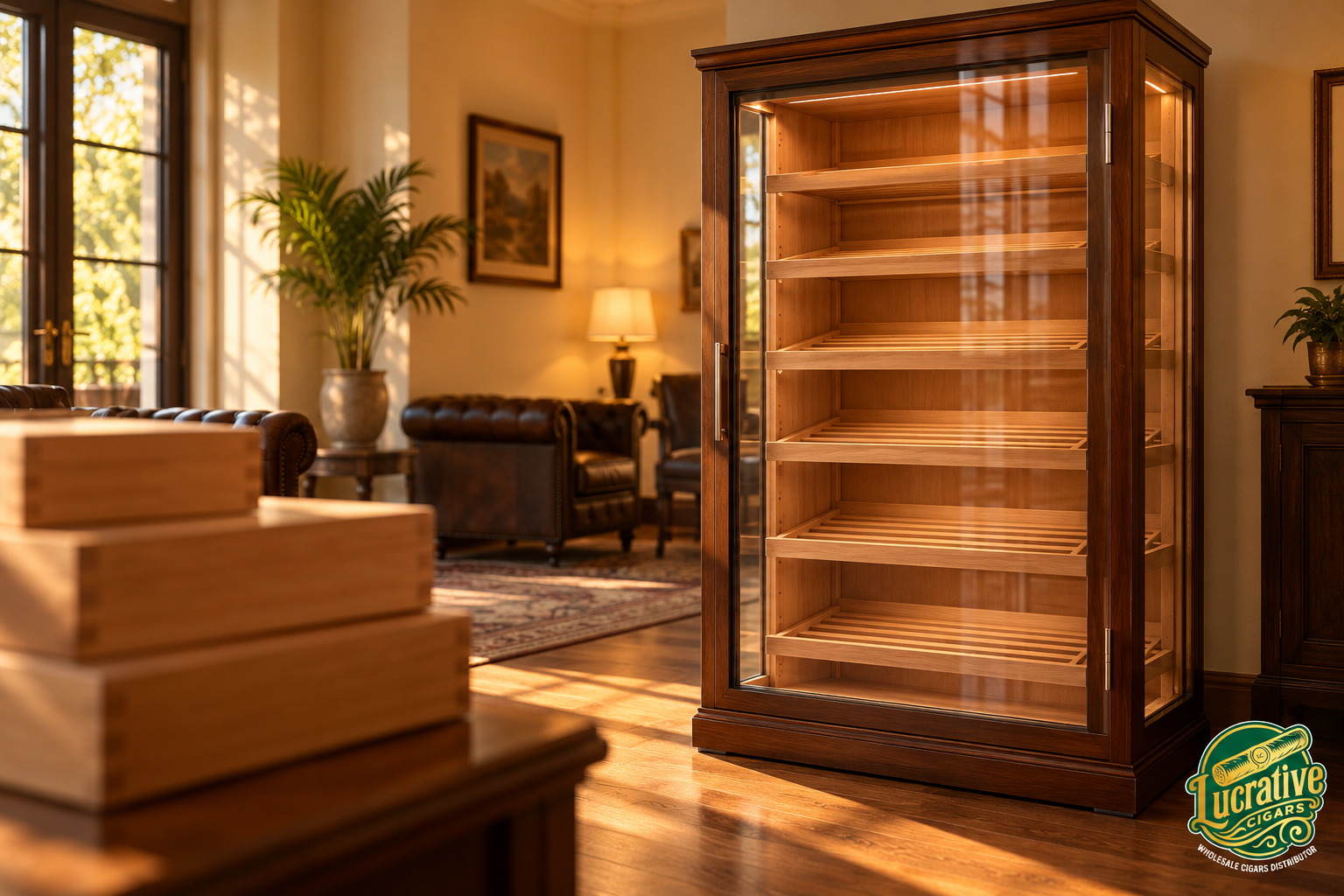
The new cabinet humidor is in, plugged in, and lit, with six boxes of cigars waiting in the back. It's tempting to fill it the same afternoon.
Don't. A new humidor is full of dry wood, and dry wood pulls moisture out of whatever you put inside it. If you load it now, your first cigars do the seasoning, and they pay for it in dry wrappers.
Seasoning takes a couple of weeks, and most of it is waiting. Here's how to do it for a store cabinet, and how to check the hygrometer before you trust a single reading.
Why a new humidor needs seasoning
Wood takes on moisture from the surrounding air until the two match. Then it stops. The catch is how much it takes before it stops.
According to the USDA's Wood Handbook, wood kept in a room at 30% humidity holds about 6% moisture at 70°F. Put it in a humidor at 70%, and it settles near 13%. That's roughly double. Every cedar shelf and drawer in the cabinet has to take on that water.
Seasoning means giving the wood that moisture from a source you control. Skip it, and the wood takes it from the cigars instead.
Three ways to season, compared
Method | How it works | How long | Watch out for |
Seasoning packs | 84% packs release moisture into the closed cabinet | About 14 days | Keep the door shut the whole time |
A dish of distilled water | A shallow dish evaporates inside the closed cabinet | Until the reading holds steady | Spills can soak and warp the wood |
The cabinet's own humidifier | A powered unit runs with the door closed | Until the reading holds steady | Follow the maker's setup instructions |
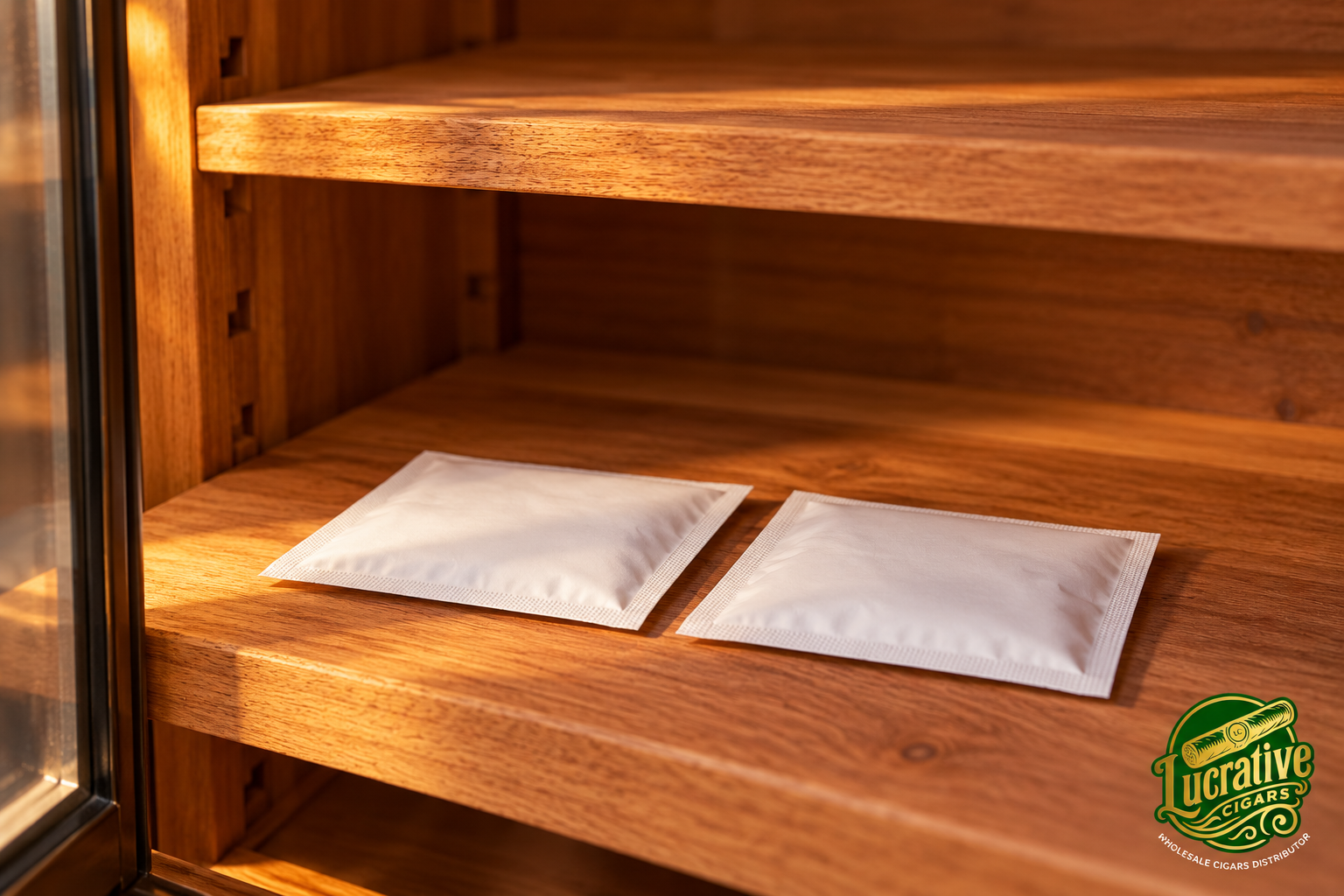
Seasoning packs are the least work. Boveda, the humidity pack maker, makes 84% packs specifically for seasoning. Leave them in the closed humidor for about 14 days, then swap them for normal humidity packs. Most of the moisture comes out in the first week, and the wood absorbs the rest slowly.
Two methods to avoid. Don't wipe the wood with a wet cloth and call it done. A wipe-down adds only a few grams of water, nowhere near enough to humidify the wood. And never pour water onto the shelves or let a dish tip over, because soaked wood can warp.
Seasoning a commercial cabinet or walk-in
A store cabinet is the same job on a bigger scale. There's more wood, so it needs more moisture, and it can take longer to settle than a desktop box.
So plan for it. Have the cabinet in place and seasoned for at least two weeks before the stock arrives. Keep the door closed, and resist checking inside every day. Opening it lets the moisture out.
Size your packs or water to the cabinet. Pack makers publish sizing by capacity, and a cabinet holding hundreds of cigars needs several times the capacity of a home humidor.
If the cabinet has a powered humidifier, use it. Cigar Oasis recommends distilled water for its units, and Lucrative carries the Cigar Oasis Magna 3.0. Its product page positions it for cabinet humidors and walk-in spaces. For choosing the cabinet itself, see the guide to cigar display humidors for stores.
Test the hygrometer before you trust it.
The whole process depends on one reading, so make sure it's right. The salt test is the standard home check, and it costs almost nothing.
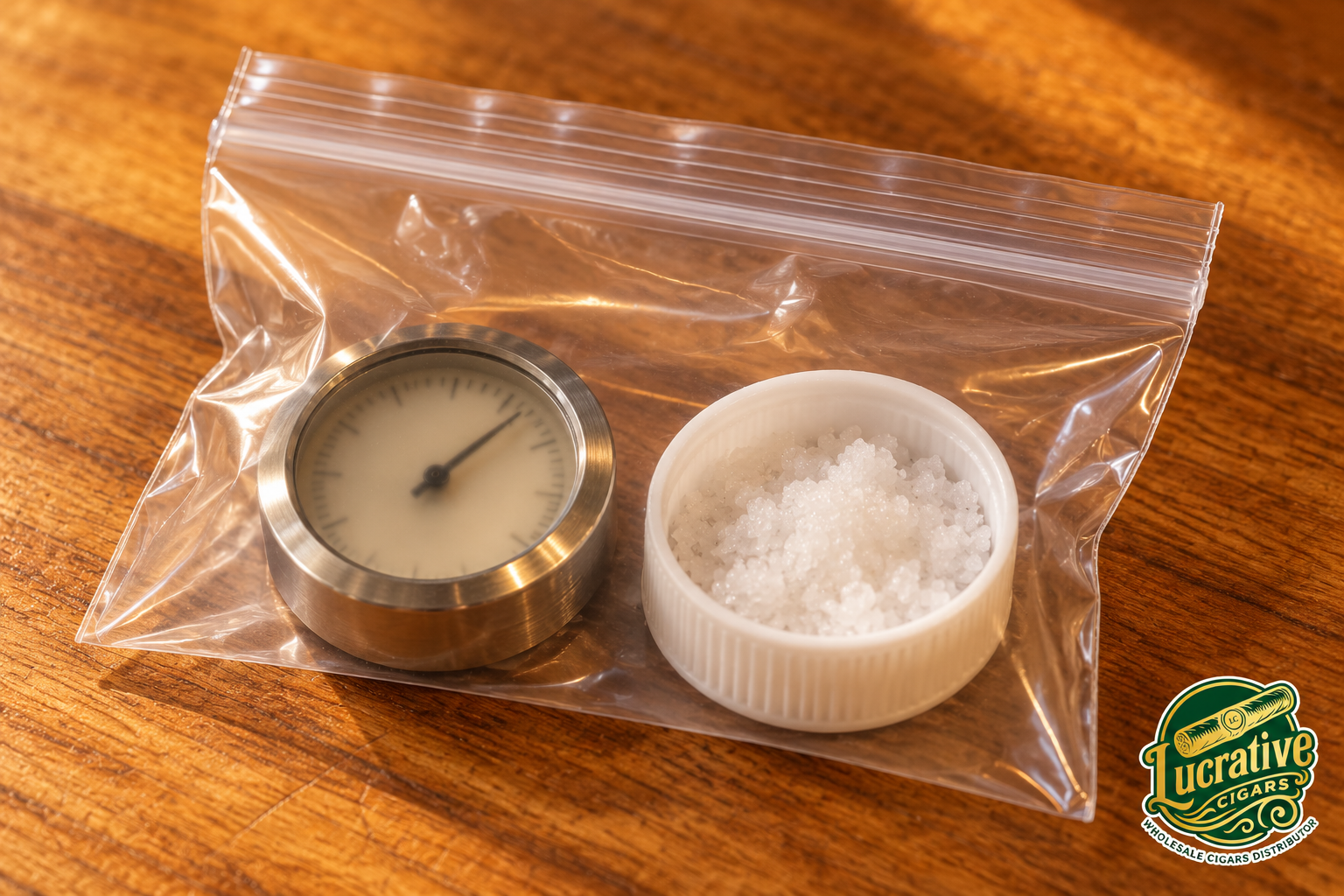
- Put about a teaspoon of table salt in a bottle cap. Add a few drops of water to make a damp paste. Don't dissolve it.
- Seal the cap and the hygrometer in a zip bag or a small airtight container.
- Leave it for at least six hours. Overnight is easiest. Read it without opening the bag.
- Compare the reading with 75%. Damp salt holds the air around it at about 75% at room temperature. That's what makes it a reliable test.
The difference is your hygrometer's error. If it reads 71%, it's reading 4 points low, so add 4 to every reading. Analog dials usually have a small adjustment screw on the back. For a digital unit you can't adjust, write the correction on a label inside the cabinet door.
Retest every few months, and any time a reading looks odd. A hygrometer that's off by a few points can let a cabinet run too wet or too dry without anyone noticing.
When to load the cabinet
Load the cigars once the reading has held at your target for a couple of days with the door closed. Lucrative's storage guidance is 65-70% relative humidity and 65-70°F.
Take the seasoning packs out first. They're set for seasoning, not for keeping cigars, so swap them for normal humidity packs or let the cabinet's humidifier take over. Lucrative's Boveda 320-gram pack is the brand's largest format, designed for the volume of a retail humidor or display cabinet.
Then check the reading every day for the first few weeks. A full load of stock can shift it for a day or two while everything settles.
When to season it again
Seasoning isn't only for new humidors. Season the cabinet again if:
- It has stood empty or switched off long enough to dry out.
- The humidifier failed, and the reading dropped for days.
- You've moved it to a new location or store.
- You've deep-cleaned it, for example, after finding mold.
Between seasonings, keep the humidity packs fresh and replace them about every three months.
Six things to check before the first cigar goes in
- The cabinet has been seasoning with the door closed for about two weeks.
- The hygrometer has passed a salt test, and any corrections are written down.
- The reading has held between 65% and 70% for a couple of days.
- Seasoning packs are out, and normal humidity packs or the humidifier are in.
- The cabinet sits away from heat vents and direct sunlight.
- Someone is named to check the reading every day for the first few weeks.
The short version
New humidor wood is dry and will draw moisture from your cigars if you let it. Season the cabinet empty first: seasoning packs with the door closed for about two weeks is the simplest way, and a dish of distilled water or the cabinet's own humidifier also works. Don't soak or wipe the wood.
While it seasons, salt-test the hygrometer to confirm the reading is real. Load the stock once the cabinet holds 65 to 70% for a couple of days, then check it daily for the first few weeks. When it's ready to fill, apply for a wholesale account with Lucrative Cigars.
Frequently asked questions
How long does it take to season a humidor?
About 14 days with seasoning packs. A large store cabinet can take longer than a desktop humidor because there's more wood. The real test is a reading that holds steady at your target for a couple of days.
Do you need to season a humidor?
Yes, if it has wood inside. A new humidor needs it, and so does one that has dried out after standing empty. Without seasoning, the wood pulls moisture from the cigars.
Can you season a humidor with distilled water?
Yes. A shallow dish of distilled water in the closed humidor works, as long as the water stays off the wood. Spills can soak and warp the shelves, and that's why seasoning packs are the tidier option.
How do I know my humidor is seasoned?
When the hygrometer holds at your target for a couple of days with the door closed and no cigars inside. If the reading keeps sliding down, the wood is still absorbing.
How do you calibrate a hygrometer?
With a salt test. Seal the hygrometer in a bag with a damp salt bottle cap for at least 6 hours, and it should read about 75%. The difference is the error, so adjust the dial or note the correction.