Cigar Plume vs Mold: How to Tell Them Apart in a Retail Humidor (2026)

Key Takeaways
- Mold usually has color, looks fuzzy or blotchy, and leaves a stain when you brush it. Plume, also called bloom, is a fine white powder that brushes off without a mark.
- True plume is uncommon, and experienced smokers still argue about it. In a store, treat anything you're not sure about as mold.
- Mold needs moisture. The risk climbs above about 72% humidity, and Lucrative's storage guidance is 65 to 70%. A cabinet running wet is the usual cause.
- Pull moldy cigars from sale and move them away from the rest of the stock. Don't brush them off and put them back.
- Prevention is a daily habit: check the hygrometer and rotate stock so nothing sits untouched for months.
During a morning humidor check, someone spots white specks on the wrappers in a box near the back. It might be plume, the fine bloom some cigars develop in storage. It might be mold.
The answer decides what happens next. Plume gets a gentle brush, and the box goes back on the shelf. Mold means pulling the box and checking everything around it.
Here's how to tell them apart quickly, what to do if it's mold, and how to stop it from coming back.
What mold and plume actually are
Mold is a fungus. It grows on cigars kept too warm and too humid, and it tends to have color. When you brush it, it leaves a stain.
Plume, also called bloom, is a fine white powder that sits on the wrapper and brushes off without leaving a mark. That's the distinction Cigar Aficionado's glossary draws, and it calls plume harmless to the cigars.
The difficulty is that plume is uncommon, and not everyone agrees on how often it's real. Plenty of experienced smokers say most white specks they've seen turned out to be mold. That's why the safe rule in a shop is simple: if you're not sure, treat it as mold.
A quick check at the humidor
What to look at | Mold | Plume |
Color | Often white, but can be gray, green, black or orange | Fine white specks only |
Texture | Fuzzy, raised or blotchy | Flat and powdery |
After a gentle brush | Leaves a stain or mark | Comes off clean |
If you're still not sure | Treat it as mold | Treat it as mold |
Smell is a useful tiebreaker. Mold usually smells musty.
Check the box and the shelf as well as the cigar. Mold on the cedar or the inside of the box means the problem is bigger than one stick.
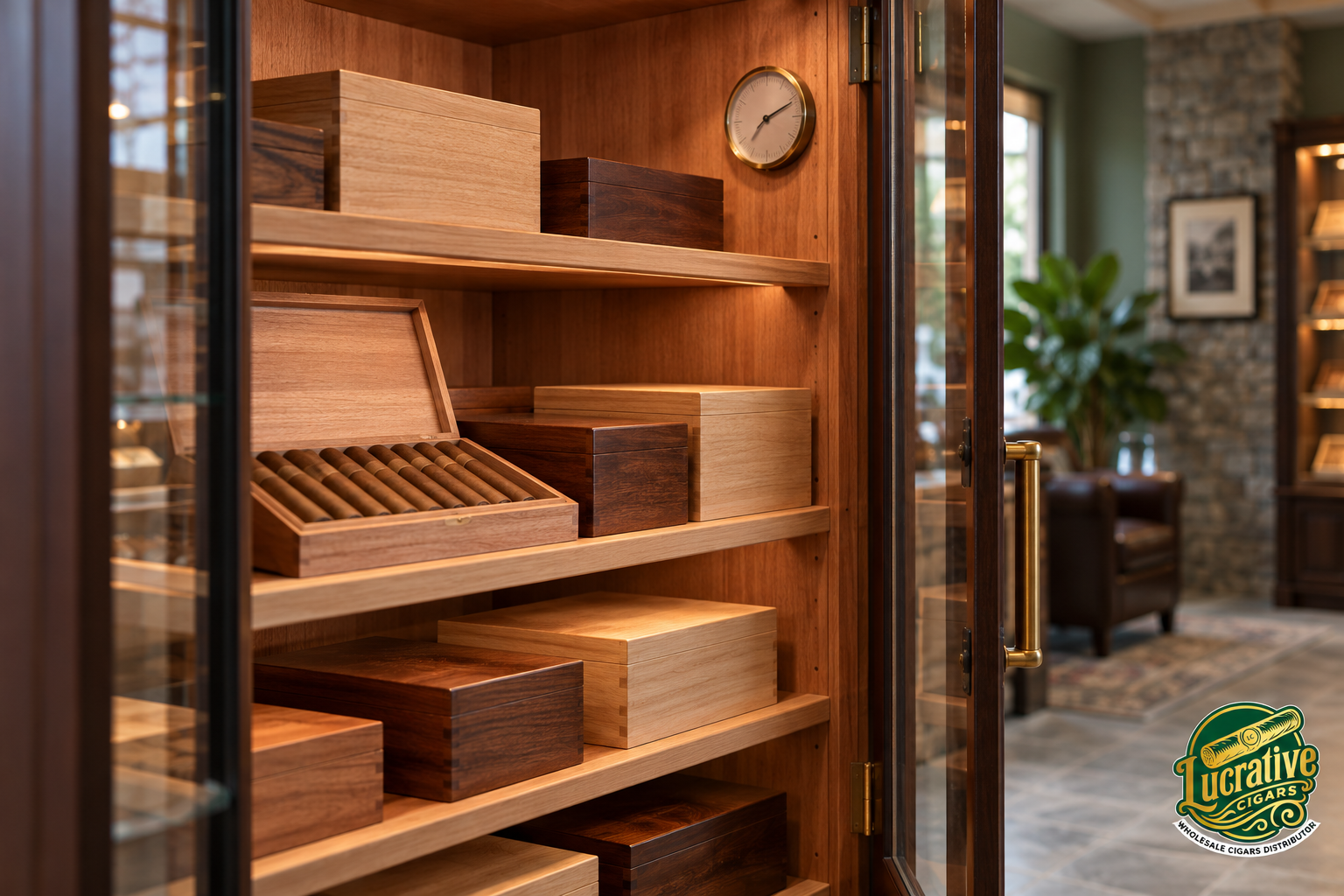
If it's mold, do this today.
- Pull the affected cigars from sale. Don't brush them off and put them back. You can't tell how deep the mold goes.
- Move them out of the humidor. Bag them and keep them away from the rest of your stock.
- Check every box nearby, along with the shelves and the walls of the cabinet. Separate anything clean from anything affected.
- If it arrived that way, photograph it. Lucrative's returns policy asks for damage to be reported within 48 hours of delivery, with photos of the item and the original packaging.
- Clean out the humidor. Take everything out and vacuum the inside. Wipe it lightly with isopropyl alcohol and then distilled water, without soaking the wood, and let it dry with the door open for about a day. Replace any passive humidification rather than reusing it.
- Season it again and wait. Give it about two weeks at steady humidity with no cigars inside, watching for new growth, before you restock.
Write off the moldy cigars. They're damaged stock, and there's no way to make them saleable again.
Why does mold shows up in a store humidor
Mold needs moisture, and in a humidor, that usually means one of a few things went wrong.
The humidity crept up. Boveda, the humidity pack maker, puts the mold risk above about 72% relative humidity. Lucrative's storage guidance is 65 to 70%, and it notes that wide swings in temperature or humidity can promote mold.
The hygrometer is wrong. If it reads low, the cabinet runs wetter than you think. A salt test every few months catches that.
Water got where it shouldn't. An overfilled humidifier or water pooling on a shelf adds moisture faster than the cabinet can spread it.
The cabinet sits somewhere warm. Sunlight or a nearby heat source raises the temperature inside, and warm, humid air is what mold likes.
Stock sat untouched. A box nobody has opened for months is where problems go unnoticed.
If you've found mold once, run the cabinet at the low end of the range. Lucrative's FAQ notes that many smokers prefer 65 to 68% anyway.
Six habits that keep mold out
- Check the hygrometer every day, and salt-test it every few months.
- Keep humidity at 65 to 70%, and lower toward 65% if you've had mold before.
- Never let water stand in the cabinet. Refill humidifiers carefully, and don't overfill pillows or sponges.
- Rotate boxes so nothing sits untouched at the back for months.
- Inspect stock when it arrives. The receiving routine in the tobacco beetles guide catches mold, too.
- Replace humidity packs on schedule, about every three months.
The short version
Mold has color, looks fuzzy, and leaves a stain. Plume is a fine white powder that brushes off clean. Real plume is uncommon, so if you're unsure, treat it as mold: pull the cigars from sale, check the boxes around them, then clean and re-season the humidor before you restock.
Mold usually means the cabinet has been running too wet or too warm. Keep it at 65 to 70% and check the hygrometer daily. When you're ready to restock, apply for a wholesale account with Lucrative Cigars.
Frequently asked questions
What does mold on a cigar look like?
Fuzzy or blotchy spots, raised slightly off the wrapper. It's often white but can be gray, green, black, or orange, and it leaves a stain when you brush it.
Is the white stuff on my cigars mold?
It could be mold or plume. Plume is a fine, flat white powder that brushes off without a mark. Mold is fuzzy and leaves a stain. If you can't tell, treat it as mold.
Can you save moldy cigars?
Not for sale. You can't tell how deep the mold goes, so brushing it off doesn't fix the cigar. Pull them and write them off.
What humidity causes mold in a humidor?
Mold risk rises above about 72% relative humidity. Keeping the cabinet at 65 to 70%, as Lucrative recommends, keeps you well below that, as long as the hygrometer is accurate.
Does mold spread to other cigars?
It can. That's why the usual advice is to separate moldy cigars from the rest and keep the clean ones isolated until the humidor has been cleaned, so the mold isn't brought back in.