Limited-Release and New Wholesale Cigars: How Retailers Create Urgency | Lucrative Cigars
Limited-Release and New Wholesale Cigars: How Retailers Create Urgency
Scarcity is one of the oldest and most reliable commercial forces in retail. When a product is available in limited quantities for a limited time, the psychology of purchase changes fundamentally.
The customer is no longer making a leisurely decision that can be deferred to the next visit. They are deciding whether to act now or risk the opportunity being gone. In cigar retail, this dynamic is especially powerful because limited-release cigars carry the additional weight of craft, aging, and allocation constraints that make the scarcity feel authentic rather than manufactured.
For wholesale cigar buyers, limited-release and new-arrival inventory is not just a premium product tier. It is a strategic tool for generating the specific customer behaviors that drive long-term retail revenue: repeat visits, word-of-mouth referrals, increased average transaction value, and the kind of loyalty that survives competitive pressure. This guide covers the mechanics of building a limited-release strategy, the retail practices that convert scarcity into sustained revenue, and the inventory management principles that protect buyers from the risks that come with unfamiliar products.
For a broader overview of how limited releases fit within a full retail cigar program, see the guide to best wholesale cigars for retail stores by customer type.
Why limited releases create stronger customer demand.
The commercial power of a limited-release cigar comes from the convergence of two forces: genuine product scarcity and the customer's awareness of that scarcity. A cigar that is available everywhere, any time, generates purchasing behavior that is convenient and passive. The customer knows they can get it whenever they want, so they rarely feel pressure to act. A cigar with a confirmed allocation, a production run that will not be repeated, or an aging profile that takes years to replicate creates an entirely different decision environment.
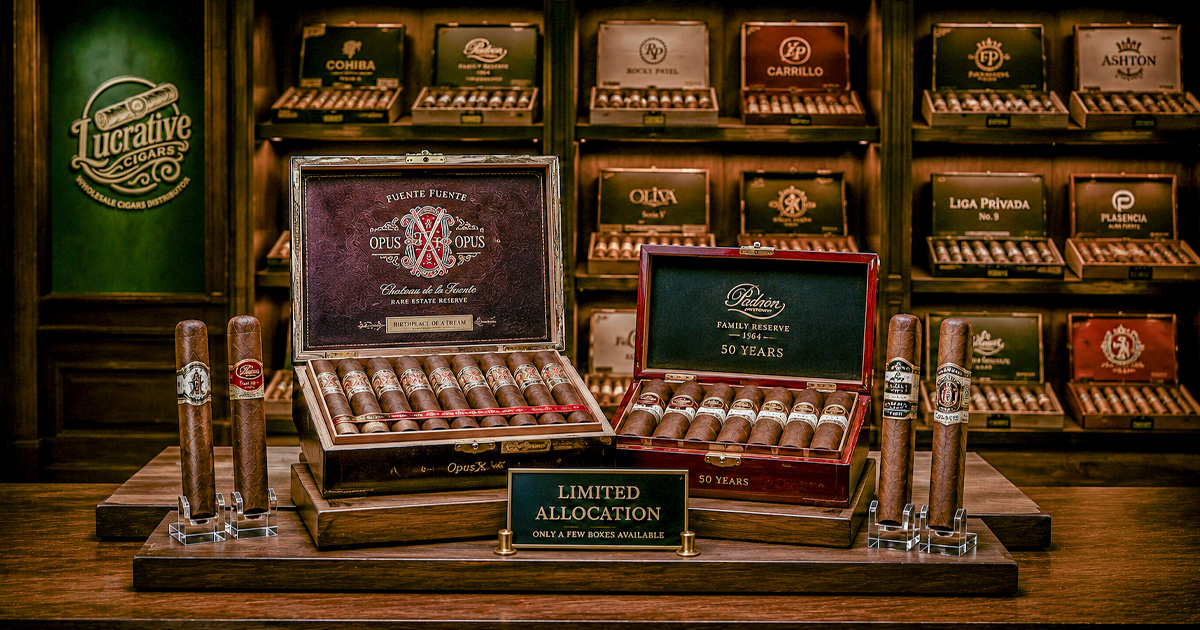
Premium cigar manufacturers intentionally reinforce this dynamic. Brands like Arturo Fuente release the Fuente Fuente OpusX in controlled allocations that have maintained their demand premium for decades. Padrón's anniversary series releases are timed events that generate customer anticipation months in advance. These are not marketing constructs built on false scarcity. They reflect genuine production constraints, aging commitments, and quality thresholds that manufacturers refuse to compromise to meet demand. The scarcity is real, and experienced smokers know it.
For retailers, the practical implication is straightforward. Stocking limited-release inventory from the hot and limited releases and rare cigars categories positions your retail program as one with access and relationships that competitors may not have. That positioning is worth more than the margin on any individual transaction.
How fear of missing out drives repeat visits.
The repeat visit is the most valuable behavioral outcome a cigar retailer can generate. A customer who visits once and makes a purchase is a transaction. A customer who visits regularly because they believe your shop or lounge is the place where things happen is a long-term revenue relationship. Limited-release cigars are among the most effective mechanisms for fostering that belief.
When customers know that your program occasionally carries Weller by Cohiba, Gurkha Cellar Reserve aged expressions, or a new boutique release that has not yet reached broader distribution, they have a reason to check in that has nothing to do with running out of their regular smoke. That check-in visit generates purchases even when the specific limited product is the reason for coming in, because customers who are already in the door and already engaged rarely leave without buying something.
Specific limited-edition products that consistently generate this repeat-visit behavior include Weller by Cohiba 12-Year Toro, Gurkha Cellar Reserve 21-Year Solara, CAO Arcana V1 Mortal Coil, and Alec Bradley Blind Faith. These are products that serious smokers seek out by name and that signal to first-time visitors that your program is worth paying attention to.
The role of boutique cigar brands in humidor differentiation.
A boutique cigar brand is typically defined by small-batch production, independent ownership, and a level of blending attention that larger manufacturers with high-volume output cannot always replicate at every price tier. Boutique brands are not obscure for the sake of obscurity. They are often produced by master blenders with deep industry experience who choose to operate outside the volume constraints of the major houses to maintain control over quality at every stage.
For retailers, boutique cigars serve a differentiation function that national brands cannot. A humidor stocked only with Padrón, Rocky Patel, Oliva, and Romeo y Julieta is a credible humidor, but it also looks like every other credible humidor in your market. A humidor that includes those anchors alongside EP Carrillo boutique lines, Plasencia limited expressions, Joya de Nicaragua special releases, and Aging Room limited editions communicates a level of curation that attracts experienced smokers who have outgrown the standard selections.
Boutique inventory worth building into a differentiated humidor program includes EP Carrillo Pledge, Plasencia Alma Fuerte, Joya de Nicaragua Antano Dark Corojo, Aging Room Quattro Nicaragua, and Alec Bradley Prensado. Each of these brands represents a distinct story worth telling at the counter and a level of quality that rewards the customer who follows a staff recommendation.
How retailers use small-batch cigars to build reputation.
Reputation in cigar retail is built on the quality and reliability of what you recommend, not simply on what you stock. Any retailer can order from a catalog of popular brands. The retailers who build lasting reputations in their markets are those whose staff can explain why a specific small-batch cigar is worth seeking out, and whose customers learn to trust those explanations through repeated positive experiences.
Small-batch and boutique cigars are the best available tool for building that recommendation currency because they require genuine knowledge and conviction to sell effectively. A customer who asks about a Plasencia Alma Fuerte needs a staff member who can describe its Nicaraguan origin, full-body profile, pressed format, and why this cigar rewards a patient smoker with 2 hours to invest in an experience. That conversation is where retail credibility is built, and it cannot happen if the only inventory on the shelf is product that sells itself without staff input.
Retailers should invest in having at least one or two staff members smoke through new boutique arrivals before they hit the floor. The investment in product knowledge pays for itself many times over in the quality of recommendations that follow and in the loyalty of the customers who benefit from them.
Best practices for announcing new arrivals.
A new cigar that arrives in your humidor and sits without any customer awareness generates a fraction of the revenue it would generate with even minimal communication. The arrival of a new SKU, especially a limited- or boutique-style product, is a marketing event that deserves to be treated as such. The announcement strategy does not need to be elaborate to be effective. It needs to be timely, specific, and communicated through the channels your best customers actually use.
- Announce new arrivals within 24 to 48 hours of the product hitting the floor, not after it has been sitting for a week.
- Be specific in the announcement: name the cigar, describe the blend and wrapper, state the quantity available, and give a price.
- Use language that communicates scarcity when it is real: "limited allocation," "first time in stock," or "only X boxes available" frames the purchase appropriately.
- Photograph the actual product in your humidor rather than using manufacturer stock images, which creates authenticity and shows customers that the product is physically present.
- Tag or mention the brand's social media accounts when announcing new arrivals to reach customers who follow the brand directly.
- Follow up with a sold-out announcement when limited stock is depleted, reinforcing the scarcity message for future arrivals and rewarding customers who acted quickly.
Social media and email marketing for new cigar drops.
Social media strategy. Instagram and Facebook are the primary social channels for cigar retail communication because the cigar audience is highly visual and the community is active on both platforms. New arrival announcements perform well in both feed posts and Stories, with Stories particularly effective for time-sensitive, limited inventory because the 24-hour format mirrors the product's urgency.
Effective new arrival posts share three elements: a high-quality photograph of the product in context (in the humidor, on a counter, or being held), a concise description of the blend and why it is notable, and a clear call to action that tells the customer what to do next whether that is calling the store, visiting in person, or responding to the post to hold a box. Posts featuring a staff member holding or smoking the cigar generate stronger engagement than product-only photography because they add a human element that the cigar community responds to.
Email marketing for cigar drops. Email is the highest-converting channel for new arrival announcements among an existing customer base because it reaches customers who have already chosen to stay informed about your program. A simple format works well: a subject line that names the specific cigar and conveys scarcity, brief body copy that describes the blend and availability, a photograph, and a single, clear call to action.
Subject lines that reference specific product names outperform generic ones by a significant margin in open rates. "New arrival: Weller by Cohiba 12-Year in stock now" will outperform "New cigars have arrived" in every measurable way. Customers who have been waiting for a specific product will open immediately. Customers unfamiliar with the product are intrigued by the specificity.
Building an email list of your best customers is a medium-term investment that compounds over time. Every customer who purchases a rare cigar or requests a specific limited release is a candidate for your new arrival notification list. These are the customers who will respond most reliably to future announcements and who represent the highest lifetime value in your retail program.
Why regular inventory rotation matters.
A humidor that never changes is a humidor that gives experienced customers no reason to browse. When a customer already knows exactly what is on your shelves because it has not changed in three months, the visit becomes purely transactional. They come in, pick up what they came for, and leave without engaging with staff or discovering anything new. That is a missed revenue opportunity on every visit.
Regular rotation, meaning the introduction of new SKUs on a predictable cadence, changes the visit dynamic. A customer who knows that your humidor typically has two or three new arrivals each month will browse more thoroughly, ask more questions, and purchase more per visit than a customer who sees the same static selection on every trip. The browsing behavior that rotation generates is where impulse purchases and staff recommendations convert into additional revenue.
Monitor the new releases category weekly to stay ahead of upcoming products. Planning wholesale orders around known release schedules from major brands allows retailers to build customer anticipation before inventory arrives and to announce availability the moment product is in hand.
How exclusive cigars improve customer loyalty.
Customer loyalty in cigar retail is rarely built on price. A customer who visits your shop primarily because you are cheaper than the competitor will leave the moment the competitor matches or undercuts your price. Customer loyalty built on access and trust is far more durable. The customer who believes your shop is the place where interesting things happen, where the staff know what they are talking about, and where they occasionally find something they cannot get elsewhere has loyalty that does not dissolve at a 10 percent price difference.
Exclusive and hard-to-find cigars are the foundation of access-based loyalty. When a customer finds a Gurkha Cellar Reserve or a Weller by Cohiba at your location, but not at the three other shops they checked, your shop becomes the first call for the next allocation. That first-call behavior is worth more than any formal loyalty program because it is driven by genuine preference rather than points accumulation.
Margin advantages of premium and limited cigars.
Limited-release and boutique cigars carry pricing power that standard catalog inventory does not. The combination of genuine scarcity, premium positioning, and customer awareness of both factors allows retailers to price limited inventory at margins that would generate resistance in a standard product context. A customer who has been looking for a specific Padrón anniversary release or a Weller by Cohiba allocation is not primarily motivated by price. They are motivated by access. The transaction's margin structure reflects that.
Per-stick margins on limited- and boutique-products typically run 10 to 20 percentage points higher than on accessible standard inventory, depending on the brand and the allocation constraint. A retailer who secures a modest allocation of a highly sought-after release and prices it at an appropriate premium margin can generate more gross profit from a single box than from several cases of standard inventory. This is the argument for building limited-release purchasing into every wholesale strategy, not as the foundation of the program but as a high-margin complement to core inventory.
Products in the rare cigars category represent the highest margin opportunity in the wholesale cigar portfolio. Buyers who establish wholesale accounts and develop relationships with distributors who have access to genuine limited allocations position themselves ahead of competitors who wait for the same products to become available in the standard catalog.
How retailers avoid overcommitting to unfamiliar releases.
The risk of limited-release purchasing is real. A cigar that generates strong national buzz may not resonate with your specific customer base. A boutique brand that performs well in a major urban market may move slowly in a suburban smoke shop. The solution is not to avoid limited and boutique inventory but to enter it with measured initial commitments and scale based on confirmed customer response.
The most practical risk management tool is the sampler pack approach: stock a small quantity of a new, limited-release product, introduce it to your best customers through a staff recommendation or an announcement, and evaluate response before committing to a larger order. If four customers ask about a specific limited cigar after you announce it via email, that is an actionable demand signal. If two customers purchase on the first announcement, you have established baseline demand that justifies a follow-up order.
- Start new boutique and limited SKUs at minimum viable quantity: one to three boxes, unless you have confirmed demand.
- Use customer pre-orders or hold requests for highly anticipated releases to validate demand before placing the wholesale order.
- Track which limited releases sold through completely versus which required markdown or slow turn, and use that data to calibrate future allocation decisions.
- Staff the new arrival with genuine product knowledge before it goes on the floor so that the recommendation conversation can happen immediately.
Creating VIP customer programs around rare cigars.
A VIP notification program for limited-release inventory is one of the highest-return customer relationship investments a cigar retailer can make. The program does not need to be elaborate. At its most basic, it is a list of customers who have expressed interest in rare or limited products and who receive advance notice, typically 24 to 48 hours, before new arrivals are announced to the general customer base.
The psychological value of VIP access is disproportionate to its operational cost. A customer who receives a personal message or an early notification email for a limited Gurkha or Padrón release feels recognized and valued in a way that no discount program can replicate. They feel like insiders, and the cigar community is a culture that places significant value on insider access. That feeling generates loyalty that compounds over time.
To build a VIP program, start by identifying customers who already exhibit high-value behaviors: they ask about new arrivals, purchase premium products consistently, bring friends into the shop, and engage with your social content. These customers have already self-identified as candidates. A simple opt-in to an early-access text or email list is the mechanism — no special infrastructure required.
Pairing limited releases with events and tastings.
A limited-release cigar is an ideal centerpiece for a lounge or retail event because it combines the product scarcity that creates anticipation with the experiential context that deepens customer engagement. A brand ambassador evening featuring a new Plasencia limited expression, a vertical tasting of Perdomo anniversary releases, or a launch event for a new Gurkha allocation all create the kind of memorable experience that customers associate with your brand long after the event is over.
Events built around limited releases perform particularly well when the product story is compelling and communicable. An aged cigar with a documented history, a blend that required years of tobacco development, or a brand with a master blender whose story connects with your customer base gives the event its content. It gives attendees something worth sharing on their own social channels afterward.
Combine event programming with the sampler packs category to create take-home options for event attendees. A guest who attends a tasting featuring three limited cigars and leaves with a sampler pack of their favorites has made a purchase, extended their experience beyond the event, and been introduced to the buying path that leads to future full-box orders. That single transaction structure, event attendance plus sampler purchase, is one of the highest-value customer journeys available to a cigar retailer.
|
Get First Access to Limited-Release Wholesale Cigars Lucrative Cigars supplies retailers and lounges with limited-release, boutique, and hard-to-find wholesale cigars from the industry's most sought-after brands. Apply for a wholesale account and stay ahead of your market. Shop Hot and Limited Releases | Browse Rare Cigars | Apply for Wholesale Access |
Frequently Asked Questions
Do limited-release cigars sell faster than standard inventory?
In most retail environments, yes. Limited-release cigars benefit from confirmed scarcity, which creates purchase urgency that standard catalog inventory does not generate. Customers who are aware of a limited allocation and have been looking for a specific product will act quickly when it becomes available. The sell-through rate on well-chosen limited releases is typically faster than on comparable premium standard inventory because the decision has often already been made before the customer walks in the door. The caveat is that the limited release must be relevant to your specific customer base. A highly sought national release may move slowly in a market where your customers are not yet familiar with the brand.
How often should retailers bring in new cigars?
A practical cadence for most smoke shops and lounges is one to three new SKUs per month introduced on a rolling basis rather than a large quarterly overhaul. This frequency keeps the humidor feeling active and current without creating the operational complexity of managing a constantly shifting full inventory. New arrivals should be communicated to customers immediately and positioned with context that explains why the product was selected. A monthly rhythm of new arrivals gives staff fresh recommendation material, gives regular customers a reason to browse on every visit, and creates a sustained stream of announcement content for social media and email channels.
What are boutique cigars?
Boutique cigars are produced by independent manufacturers or small-batch operations that prioritize blend quality and production control over volume output. They are typically made in limited quantities, often by master blenders with significant industry experience who operate outside the major manufacturer houses. Boutique cigars are not uniformly more expensive than national brand cigars. Still, they are generally produced with a level of attention to individual leaf selection, fermentation, and aging that larger production runs do not always permit. For retailers, boutique cigars serve a humidor differentiation function because they offer experienced customers something beyond the standard selections available at every retail location.
Why do cigar collectors seek limited editions?
Cigar collectors seek limited editions for the same reasons collectors seek limited editions in any category: scarcity, authenticity, and the experience of acquiring something that most people cannot. Beyond the collecting motivation, limited-edition cigars frequently represent the best work of their makers, using the finest tobacco from exceptional harvests or the most carefully developed blends from a manufacturer's portfolio. The Padrón 1926 series, the Arturo Fuente OpusX, and the Gurkha Cellar Reserve aged expressions are limited because the tobacco required to produce them consistently is genuinely finite. Collectors respond to that authenticity and are willing to pay the access premium it commands.