Can You Rehydrate Cigars? What Retailers Can Save and What to Pull (2026)
Key Takeaways
- Most dry cigars can be brought back if the wrapper is still intact. Cigars with cracked wrappers that are shedding tobacco usually can't be saved.
- Go slowly. Cigars lose moisture far faster than they can safely regain it, and quick fixes like a wet sponge crack the wrappers.
- A simple routine works for store stock: a sealed container with humidity packs at 65% for about four weeks, then 69% for four more, checking the wrappers each week.
- If cigars arrive dry, photograph them and the packaging and contact Lucrative within 48 hours of delivery. That's the window its returns policy sets for damage claims.
- Prevention is cheaper than recovery. Once the heating comes on, check the hygrometer every day and keep the humidifier filled.
The heating comes on for the season, and a couple of weeks later, the wrappers on a box near the bottom of the cabinet feel crisp. One has a hairline crack in the cap. When you finally check the hygrometer, it reads well below where you set it.
Whether those cigars can go back on sale depends on how dry they got and how patient you are. Most can be saved. A few can't, and a box that arrived dry is a different conversation with your supplier.
Here's how to tell which is which, and how to bring stock back without cracking it.
How to tell if a cigar is too dry.
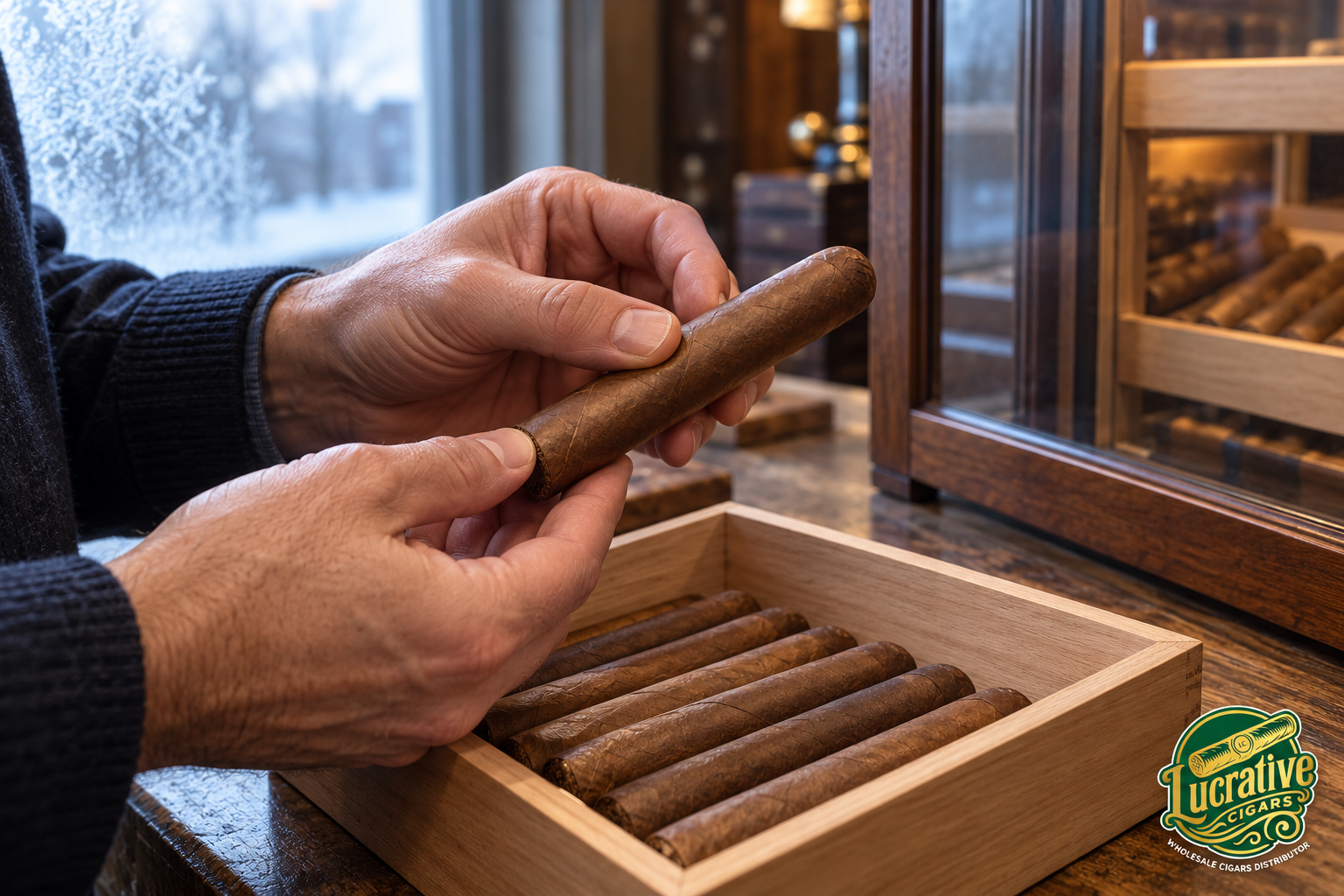
Start with your fingers. A well-kept cigar has a slight give when you press it gently. A dry one feels hard and crisp, and the wrapper may crackle.
Then look closely. Dryness shows up as a dull wrapper, hairline cracks, flaking at the cap or foot, or a wrapper that has started to lift.
The hygrometer tells you how far things have drifted. Lucrative's storage guidance is 65-70% relative humidity and 65-70°F. A reading well below that, held for days or weeks, is how cigars end up dry.
Customers will tell you too. Dry cigars burn hot and fast, so if regulars start mentioning it, check the humidor first.
Why do cigars dry out in a store
Most dry stock comes down to a few ordinary causes.
The heating season. Heated indoor air is dry air. A humidor that held steady all summer has to work much harder once the furnace runs.
An empty or failing humidifier. Powered units need refilling, and passive packs and pillows run out. Nobody notices until the reading drops.
Where the humidor sits, the rule of thumb is to keep humidors away from direct sunlight, heat vents, and air conditioning drafts. A cabinet next to the front door or under a vent dries out faster.
Cellophane doesn't protect them. As Lucrative's FAQ points out, cellophane is semi-porous, so it slows moisture loss but doesn't stop it.
If cigars arrive dry, file the claim first.
A box that's dry when it comes out of the shipping carton is a supplier issue, not a storage one. Deal with that before you start any rehydration.
Lucrative's returns policy requires that damaged or incorrect items are reported within 48 hours of delivery, along with clear photos of the item and the original packaging. Claims sent after 48 hours may not be accepted. Resolution can be a replacement or store credit, at Lucrative's discretion.
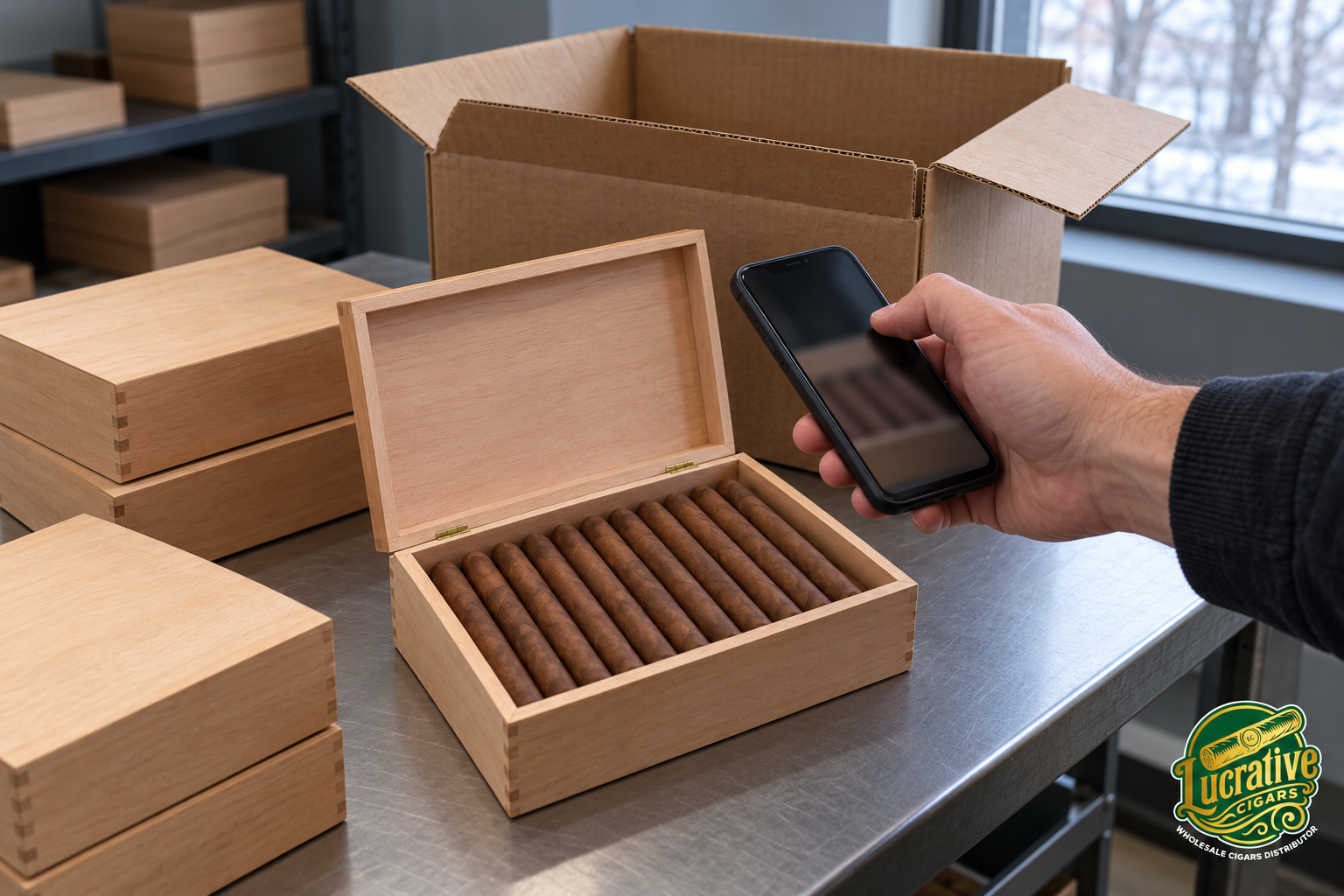
Check every delivery the day it arrives. Press a few cigars from each box, take photos if anything feels wrong, and send them in before the cigars go anywhere near your humidor. Lucrative's stock is kept in climate-controlled storage, so a dry arrival is worth reporting.
Why is slow the only method that works
A cigar is layers of leaf. The wrapper on the outside is the thinnest and most delicate, and the filler inside holds most of the tobacco. When a dry cigar takes on moisture quickly, the parts swell at different rates, and the wrapper is the one that splits.
That's why every quick fix backfires. Boveda, the humidity pack maker, says cigars lose moisture about four times faster than they can safely regain it. Wet sponges, crystals, beads, and anything that dunks or soaks the cigars adds too much moisture too quickly.
Patience is the whole method. It just needs a routine so the cigars don't get forgotten.
A rehydration routine for store stock
This is the gentle version, and it's the safer choice for cigars with fragile wrappers.
- Take the dry cigars out of your display humidor. A batch of dry stock lowers the humidity around it. Keep it separate so you can control it.
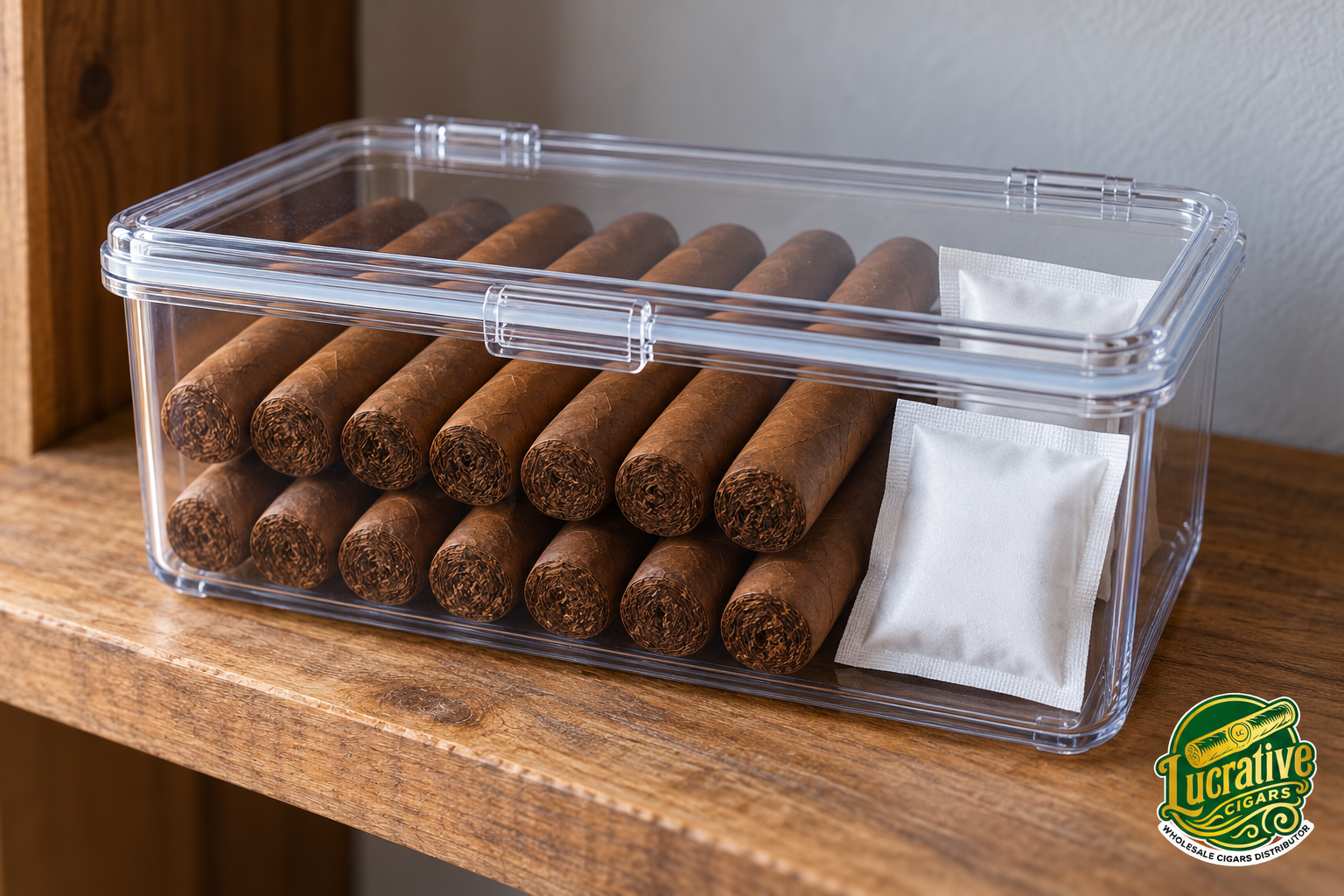
- Put them in an airtight container or humidor bag with humidity packs. Allow one 60-gram pack per 25 cigars or fewer. Lucrative stocks of Boveda humidity packs in retail and large sizes.
- Start at 65% for about four weeks. Then swap to 69% packs for about four more. Don't mix humidity levels in the same container.
- Check the wrappers every week. You're looking for the slight give to come back, with no new cracks.
- When they feel right, move them back into the humidor and sell them first. If they still feel hard, give them about two more weeks at 69%.
Write the start date on the container. Eight weeks is long enough for a box to be forgotten in the back room.
What can't be saved
Rehydration fixes moisture. It doesn't repair damage.
Pull any cigar with a cracked wrapper that's shedding tobacco or a cap that's coming apart. The same goes for a wrapper that split during recovery. Some cigars are too far gone to come back.
Those are write-offs, not discount lines. Note how many you lost and why. If it were a delivery, it belongs in your claim. If it happened in your humidor, it tells you what to fix before next winter.
Five checks to keep stock from drying out next winter
- Check the hygrometer once a day after the heating comes on. A drop caught in two days is easy to fix. One found after two weeks isn't.
- Keep the humidifier filled. Cigar Oasis recommends distilled water for its units. If you run a powered system, Lucrative carries the Cigar Oasis Magna 3.0, along with spare parts such as replacement pumps and filters.
- Move the humidor away from vents and the front door. Even a short move away from a vent means it works less hard.
- Rotate stock. Boxes at the bottom of the cabinet get forgotten. The guide to storing wholesale cigars covers rotation and receiving in more detail.
- Replace humidity packs on schedule, about every three months.
The short version
Dry cigars can usually be saved if the wrappers are intact. Separate them, seal them in with humidity packs, and bring them back slowly: about four weeks at 65%, then four at 69%, checking every week. Anything cracked or coming apart gets pulled.
If the cigars arrive dry, photograph them and contact your supplier within the claim window before doing anything else. Then stop it from happening again: watch the hygrometer daily through the heating season and keep the humidifier filled. When you're ready to restock, apply for a wholesale account with Lucrative Cigars.
Frequently asked questions
How long does it take to rehydrate cigars?
About eight weeks with the gradual method: four weeks at 65%, then four at 69%. Some cigars need about two weeks more. There's a faster option of about a month straight at 69%, but the gradual route is safer for fragile wrappers.
Can you rehydrate cigars in a humidor?
You can, but a separate sealed container works better for store stock. It gives you control over humidity, and dry cigars don't drag down the readings on your display humidor.
How do you tell if a cigar is too dry?
Press it gently. A well-kept cigar has a slight give, and a dry one feels hard and crisp. Cracks and flaking at the cap are other signs, and dry cigars burn hot and fast.
Can you sell a cigar after rehydrating it?
Yes, if the wrapper is intact and the cigar has its give back. Sell rehydrated stock first. Anything with a cracked or split wrapper should come off the shelf.
Why do cigars dry out in winter?
Heated indoor air is drier, so a humidor in a heated store loses moisture faster than in summer. Humidifiers also run out faster under that load. That's why daily checks matter most in the cold months.