How to Build a Profitable Cigar Lounge Humidor | Lucrative Cigars
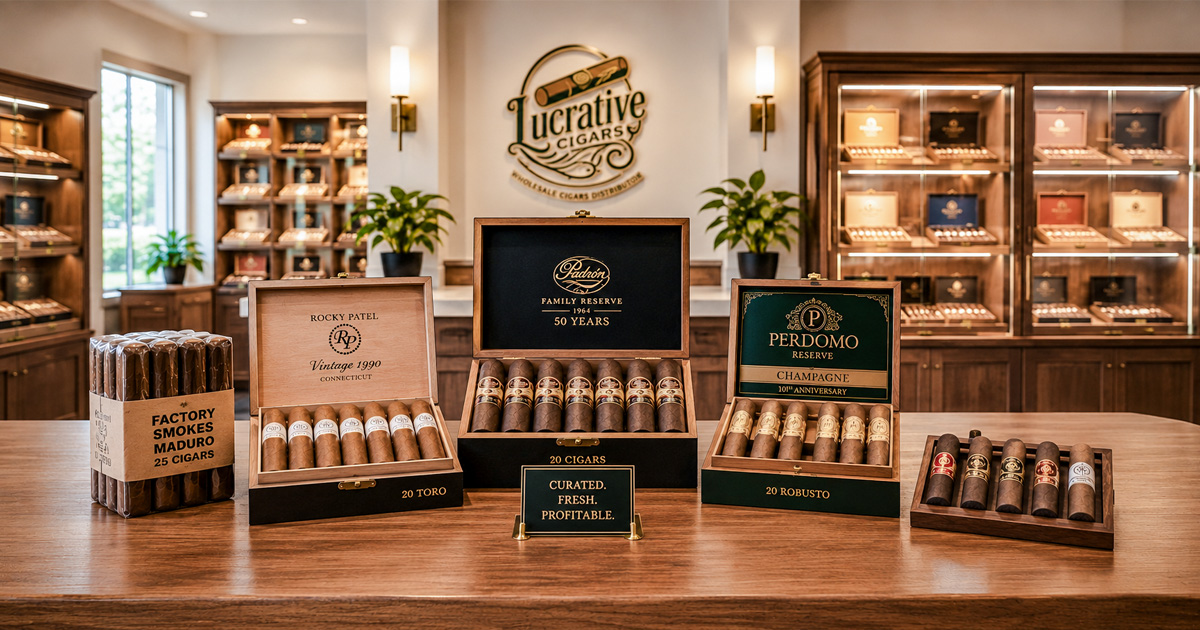
How to Build a Profitable Cigar Lounge Humidor
A cigar lounge humidor is not simply a storage unit. It is the primary expression of your lounge's identity, your quality standard, and your understanding of your customer.
The cigars on your shelves communicate to every visitor whether this is a place worth sitting down in, worth returning to, and worth spending money in. A poorly curated humidor loses customers to competitors before a single cigar is lit. A well-built humidor creates the kind of experience that generates loyal regulars, word-of-mouth referrals, and consistent revenue across every tier of your inventory.
Building that humidor requires more than ordering from a list of popular brands. It requires understanding the mechanics of inventory balance, the psychology of cigar discovery, the logistics of freshness and rotation, and the commercial opportunity that limited-release and exclusive products represent. This guide walks through each of those elements with the practical specificity that lounge operators and wholesale buyers need to make decisions that improve both the customer experience and the bottom line.
For a broader perspective on how cigar lounge inventory fits into the larger retail landscape, see our pillar guide on best wholesale cigars for retail stores by customer type.
The ideal balance: premium, mid-tier, and everyday cigars.
The most profitable lounge humidors operate on a three-tier inventory architecture. Each tier serves a distinct customer need and contributes differently to your overall margin picture. Collapsing those tiers into one undifferentiated selection is one of the most common and costly mistakes lounge operators make.
The everyday tier covers the $8 to $14 range and should account for approximately 40 percent of your SKU count. These are the cigars your regulars reach for on a Tuesday afternoon when they want a reliable smoke without a major spend. Connecticut-wrapped mild to medium cigars from Rocky Patel, Romeo y Julieta, and Oliva belong here. This tier drives transaction frequency, which keeps the lights on between high-spend weekends.
The mid-tier runs from roughly $14 to $25 and should account for about 35 percent of your selection. This is where experienced casual smokers and your loyal repeat customers live. Perdomo 20th Anniversary, Rocky Patel Edge Maduro, EP Carrillo Encore, and Oliva Serie V are prime mid-tier performers that deliver quality consistent enough to build brand loyalty within your lounge.
The premium tier above $25 should represent the remaining 25 percent of your SKU count, but will likely generate a disproportionately large share of your margin per transaction. Padrón 1964, Padrón 1926, Liga Privada No. 9, and Arturo Fuente Hemingway anchor the premium shelf and signal to serious smokers that your lounge is worth their trust and their spending.
Recognizable brands vs. discovery cigars: why lounges need both.
Every lounge needs a foundation of recognizable brands. These are the names a new visitor scans when they approach your humidor, and they immediately answer the question of whether this lounge stocks quality products. Cohiba, Padrón, Rocky Patel, Romeo y Julieta, and Arturo Fuente function as credibility anchors. They require no introduction and no sales conversation. Their presence alone justifies the visit.
Discovery cigars are equally important and serve a fundamentally different purpose. A discovery cigar is a brand or line that your staff recommends based on genuine knowledge, that surprises the experienced smoker with quality they did not expect, and that creates a conversation. That conversation is where lounge loyalty is actually built. When a customer walks out having discovered an EP Carrillo Pledge or a Plasencia Alma Fuerte that they had never tried before and loved, your lounge becomes the place that introduced them to something worth knowing about. That is a more durable loyalty than simply stocking the same brands available at every smoke shop.
Boutique and discovery inventory should include lines like EP Carrillo Pledge, Plasencia Alma Fuerte, Joya de Nicaragua Antano Dark Corojo, and Aging Room Quattro Nicaragua. These are cigars that reward the knowledgeable customer and give your staff something meaningful to recommend beyond the standard tier.
Structuring inventory by strength profile.
Organizing your humidor around strength profile is the most customer-friendly inventory architecture available. It removes confusion for new visitors, accelerates the buying decision for experienced smokers, and gives your staff a logical framework for making recommendations. A lounge that organizes by brand alone forces every customer to know every brand, which most do not. A lounge organized by strength profile serves both the first-time visitor and the seasoned collector equally well.
Mild. The mild section serves new smokers, occasional visitors, and experienced smokers who want a lighter option for a morning session or a long afternoon. Connecticut-shade wrappers dominate this tier. Romeo y Julieta 1875 Connecticut, H. Upmann 1844 Classic, Cohiba Connecticut, and Macanudo Inspirado White are reliable performers that require minimal staff explanation and move consistently.
Do not dismiss the mild tier as less valuable than the premium section. Many of your highest-frequency regular customers will smoke in the mild range. A lounge that stocks the mild tier thoughtfully and keeps it well-maintained sends a message that it takes all its customers seriously, not just the ones spending $30 per stick.
Medium. The medium strength section is typically the largest and most diverse section of a well-built lounge humidor. This is where the broadest range of wrapper profiles, origins, and price points converge. Medium-bodied cigars appeal to the widest cross-section of your customer base: experienced smokers on a casual session, business professionals entertaining clients, and hobbyists exploring new territory.
Core medium-body inventory should include Oliva Serie O, Rocky Patel Sungrown, Perdomo Habano BBA Connecticut, CAO Brazilia, and Montecristo Espada. This range offers enough variety to serve the medium-body customer across budget levels and wrapper preferences without overwhelming the humidor.
Full-bodied. The full-body section is where your most knowledgeable customers and your highest-spend regulars shop. Full-bodied cigars require more customer knowledge, which means this section benefits most from engaged staff who can guide newer visitors toward accessible entries within the category while rewarding experienced smokers with the depth of selection they expect.
Essential full-body inventory includes Padrón 1964 Maduro, Liga Privada No. 9, Liga Privada T52, Oliva Serie V Melanio Maduro, and Plasencia Cosecha 151. These are brands that serious lounge customers seek out by name and that justify the premium shelf position in your humidor.
The importance of rotating new products into the humidor.
A static humidor is a dying humidor. When a regular customer visits your lounge and sees the same selection they saw three months ago, there is no incentive to explore, no new conversation to have, and no reason to spend more than their minimum. Inventory rotation is the mechanism that keeps your most engaged customers curious about what is new and gives your staff fresh material for recommendations.
Rotation does not mean removing proven performers from your shelves. It means introducing new SKUs alongside your core inventory on a regular schedule, testing customer response, and making data-driven decisions about which SKUs earn a permanent position and which cycle out. A quarterly rotation cadence works well for most lounges. A new SKU introduced each month on a trial basis provides enough variety to sustain customer interest without creating operational complexity.
Monitor the new releases category and hot and limited releases regularly to identify incoming allocations worth adding to your rotation schedule. New releases from established brands carry built-in marketing support and generate customer conversation without requiring additional promotional investment from your lounge.
Best cigar categories for events and pairings.
Lounge events are among the most powerful revenue-generating activities available to a cigar retail operation. A well-executed pairing night, a new release tasting, or a brand ambassador event can generate in a single evening the equivalent of a week of floor sales while simultaneously deepening customer relationships and introducing your regular base to new inventory.
For pairing events, the cigar selection strategy differs from everyday inventory curation. You are looking for cigars with distinct, describable flavor profiles that interact meaningfully with the paired beverage. Complexity and consistency across the flight matter more to first-time visitors than brand recognition.
Bourbon and whiskey pairings. Full- to medium-full-bodied cigars with Maduro or Habano wrappers pair best with bourbon and American whiskey. The dark sweetness of a Maduro wrapper mirrors caramel and vanilla notes found in bourbon, creating a natural flavor bridge. Padrón 1964 Maduro, Oliva Serie V Maduro, Rocky Patel Edge Maduro, and Perdomo Habano BBA Maduro are reliable pairing anchors that experienced smokers already associate with the bourbon experience.
Rum pairings. Aged rum's sweetness and tropical fruit notes pair well with cigars with a slightly sweeter or fruitier profile. Connecticut-wrapped cigars with creamy notes work surprisingly well with lighter rums, while Maduro and aged Nicaraguan blends pair better with dark or spiced rums. Tabak Especial Dulce and Tatiana Rum are approachable pairing options that generate strong positive responses from customers who are new to cigar-and-spirits pairings.
Coffee and espresso pairings. Coffee pairing events are accessible ways to attract new customers to cigar lounges. Medium-bodied cigars with earthy, nutty notes pair naturally with single-origin espresso, while a full-body Maduro is great with a dark roast or cold brew. Rocky Patel Java Maduro and Rocky Patel Java Latte are made for this pairing.
Why freshness and storage consistency matter.
No element of lounge operations affects customer perception of quality more directly than the condition of the cigars in the humidor. A premium cigar stored at an incorrect humidity or temperature delivers a compromised smoking experience that the customer attributes to the cigar, the brand, and ultimately your lounge. A single bad experience with a dried-out Padrón or a mold-damaged Liga Privada is enough to prevent a customer from returning, even if they have spent thousands of dollars in your lounge over the years.
Proper humidor maintenance requires maintaining relative humidity between 65 and 70 percent and temperature between 65 and 72 degrees Fahrenheit. These ranges prevent both drying, which makes cigars burn hot and harsh, and excessive moisture, which promotes mold growth and wrapper deterioration. Invest in a calibrated digital hygrometer and monitor it daily. Do not rely on analog instruments, which drift significantly over time.
The quality of storage equipment directly affects the consistency of your cigars. The humidors and humidifiers category provides wholesale humidor solutions appropriate for lounge-scale operations. A walk-in humidor for a high-volume lounge or a display humidor for a boutique operation should be viewed as a capital investment that protects the value of your inventory and the quality of your customer experience.
Building customer loyalty through curated recommendations.
The most durable competitive advantage a cigar lounge can build is a reputation for excellent staff recommendations. The lounge where the staff knows you, remembers what you smoked last time, and can reliably point you toward something new that matches your taste is a lounge that commands loyalty no competitor can easily poach.
Building that reputation requires investing in staff product knowledge. At least one staff member should sample every new SKU that enters your humidor before it hits the floor. That staff member should be able to describe the wrapper, the strength, the primary flavor notes, and who in your customer base it is best suited for. This is not a luxury: it is the operational standard that separates a memorable lounge from a generic one.
Customer preference tracking, even in a simple form such as a notebook or a basic spreadsheet, dramatically improves the quality of recommendations over time. When a customer sits down, and a staff member can say, "Last time you had the Oliva Serie V, you might want to try the Melanio Maduro today," that personalized moment generates more loyalty than any loyalty program or discount.
Margin opportunities with limited-release cigars.
Limited-release cigars carry pricing power that standard catalog inventory does not. When a customer knows that a specific cigar is available in limited quantity, the urgency and perceived value of the purchase both increase. This dynamic allows lounge operators to price limited inventory at a premium without generating customer resistance, because the scarcity itself is the justification.
Allocations from the rare cigars category and hot, limited releases should be ordered proactively and positioned in a dedicated, visible section of your humidor. Cigars like Weller by Cohiba 12-Year, Gurkha Cellar Reserve 21-Year, and CAO Arcana V1 Mortal Coil are exactly the type of product that justifies a premium price position and generates the customer conversations that drive repeat visits.
Communicate incoming limited releases to your regular customers through text, email, or social media before the product hits the floor. Customers who feel they have insider access to allocations feel a connection to your lounge that is qualitatively different from transactional loyalty. They are the customers most likely to bring friends and introduce new buyers to your program.
Inventory mistakes that hurt lounge profitability.
Several inventory errors appear consistently across lounge operations that struggle to maintain healthy margins and strong sell-through. Recognizing and correcting these patterns is often the fastest path to improved lounge profitability.
- Over-ordering on slow-moving SKUs: committing to full-box quantities of untested brands before confirming customer demand ties up capital and creates dead stock that is difficult to move without discounting.
- Neglecting the mid-tier: lounges that stock only the high-end and the accessible end miss the segment of experienced casual smokers who want quality above the entry level without committing to premium price points on every visit.
- Ignoring freshness monitoring: allowing humidor conditions to drift, even temporarily, degrades the quality of the entire inventory and creates customer experience failures at every price tier.
- Stocking too many brands in the same category: seven different medium-body Connecticut options serve no customer better than two well-chosen ones, and they create decision paralysis that slows the buying process.
- Failing to communicate new arrivals: new inventory that sits in the humidor without any customer awareness generates a fraction of the revenue it would generate with even minimal communication to your regular base.
- Skipping sampler inventory entirely: lounges that carry only full boxes miss the gifting customer and the first-time visitor who wants to explore without committing to a full sampler pack investment.
Using exclusive and hard-to-find cigars to differentiate your lounge.
In markets where multiple cigar lounges compete for the same customer base, inventory differentiation is one of the clearest competitive advantages available. A lounge that carries a cigar the customer cannot find anywhere else in the market has created a reason to visit that no competitor can immediately replicate.
Hard-to-find inventory does not need to be exotic or unfamiliar. It can be a specific-aged expression from Gurkha or Perdomo with limited distribution. It can be a new release allocation from a brand like Arturo Fuente or Padrón that your lounge secured before competitors. It can be a boutique regional brand with a limited production run that most retailers in your market have not stocked.
Position your exclusive, hard-to-find inventory prominently in the humidor, with signage that communicates availability. Language like "limited quantity" or "allocated product" frames the purchase appropriately and creates the urgency that motivates action. Use the hot and limited releases section to stay ahead of incoming allocations and build your exclusive inventory position before competitors act on the same opportunities.
|
Stock Your Lounge Humidor with Wholesale Cigars That Move Lucrative Cigars supplies cigar lounges with premium, mid-tier, and limited-release wholesale inventory from the industry's most trusted brands. Apply for a wholesale account and build a humidor your customers return to. Apply for a Wholesale Account | Browse Premium Cigar Boxes | Shop Rare and Limited Cigars |
Frequently Asked Questions
What cigars should every lounge carry?
Every cigar lounge should carry at minimum one strong performer at each strength level (mild, medium, full body) across two price tiers (accessible and premium). The non-negotiable brand anchors are Padrón, Arturo Fuente, Rocky Patel, Oliva, and Romeo y Julieta. These names provide credibility to first-time visitors and satisfy regulars who default to proven quality. Beyond these anchors, at least two or three boutique or discovery cigars should round out the selection and give knowledgeable customers a reason to ask for staff recommendations.
How many cigar SKUs should a lounge stock?
Most cigar lounges operate most effectively with 30 to 60 active SKUs. Fewer than 30 limits the selection enough to frustrate experienced smokers looking for variety. More than 60 creates management complexity, increases the risk of freshness issues across slower-moving inventory, and can overwhelm customers with decision fatigue. A focused selection of 40 to 50 well-chosen SKUs covering three strength tiers, multiple price points, and a mix of core brands with rotating boutique options typically outperforms a larger, undifferentiated inventory.
How often should lounge inventory rotate?
A practical rotation cadence for most lounges is quarterly for the core inventory review, combined with monthly small additions of new or limited SKUs. Core inventory review means evaluating which SKUs have underperformed over the past 90 days and replacing them with tested alternatives. Monthly small additions keep the humidor feeling fresh and give your regular customers something new to notice on each visit without requiring a complete overhaul of your buying strategy.
Which cigars pair best with nights and events?
Pairing events benefit most from cigars with distinct, describable flavor profiles rather than complex blends that are difficult to articulate to a mixed audience. For bourbon events, Maduro-wrapped medium- to full-bodied cigars from Padron, Oliva, and Rocky Patel work reliably. For rum events, Tabak Dulce and Tatiana Rum provide approachable entry points. For coffee pairings, Rocky Patel Java Maduro and Java Latte are purpose-designed for the format. For any pairing event, using sampler packs to provide pre-portioned flights reduces per-event cost while maintaining the quality of the experience.