Best Wholesale Cigars for Retail Stores by Customer Type | Lucrative Cigars
Best Wholesale Cigars for Retail Stores by Customer Type
Stocking a cigar retail program is not simply a matter of ordering the most well-known names and waiting for the register to ring.
Retailers who build profitable cigar programs understand one foundational truth: the right cigar for your shelves depends almost entirely on who is walking through your door. A premium smoke shop in an urban market, a golf club pro shop in the suburbs, a liquor store near a highway, and a dedicated cigar lounge each serve customers with distinct preferences, budgets, and buying behaviors. A wholesale strategy that ignores those differences is built on shrinking margins and slow inventory turnover.
This guide is written for the retail buyer, the shop manager, and the operations decision-maker who wants to build a cigar inventory that moves. It covers the mechanics of matching cigar selection to customer demographics, the inventory formats that drive the best margin per square foot, seasonal buying considerations, and how recognizable brand equity works alongside boutique and limited-release cigars to create a program that generates both volume sales and repeat visits.
Popular vs. high-turnover: understanding the difference.
Many retailers make the mistake of conflating popularity with turnover. A cigar can be universally recognized by name and still sit on your shelf for three months if your customer base does not match the profile of the smoker for whom the brand is designed. High-turnover inventory is not simply the most famous inventory. It is the intersection of brand recognition, price accessibility for your specific market, and wrapper profile alignment with your customer base.
Retailers who consistently move inventory fast share a common approach: they stock a core of proven, accessible brands at the $8 to $18 per stick range, they maintain a premium tier for their loyal high-spend customers, and they use samplers and bundles to introduce new smokers to the floor. When those three layers are in balance, the program's margin remains healthy, and restock cycles stay predictable.
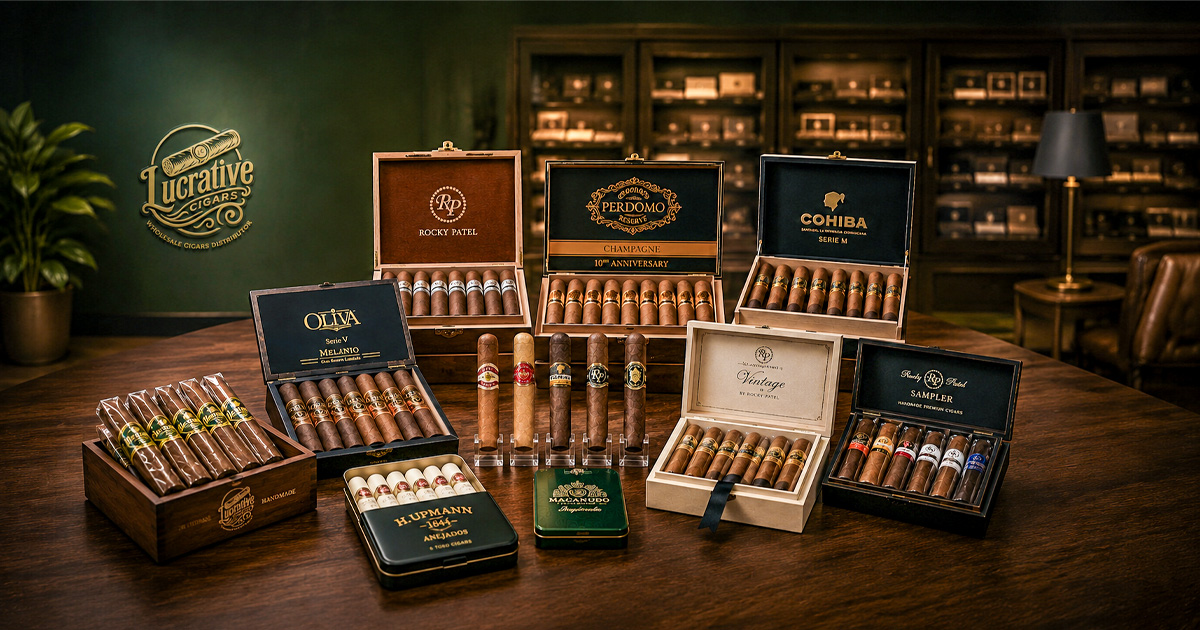
The brands that consistently appear on high-turnover lists across diverse retail formats include Rocky Patel, Romeo y Julieta, Cohiba, Oliva, and Perdomo. These brands enjoy consumer recognition, reducing sales conversations at the counter, which is especially valuable in environments where staff's cigar knowledge is limited.
How customer demographics drive cigar inventory decisions.
Before placing a wholesale order, a serious retail buyer should be able to answer three questions about their customer base. Who is the primary customer? What is their average spend per visit? How often do they return?
Demographics shape every tier of your cigar program. An older, experienced smoker shopping in a dedicated lounge is likely to prefer full-bodied Nicaraguan or Honduran blends with a Habano or Maduro wrapper. A younger customer at a liquor store who picks up cigars for a weekend occasion is more likely to reach for a Connecticut-wrapped mild cigar at a price point under $12. A corporate hospitality buyer stocking a golf clubhouse gift shop wants prestigious names at consistent quality because the cigar functions as part of an experience, not just a smoke.
Retailers who take time to understand their customer profile before ordering consistently report better sell-through rates, less dead stock, and stronger margin retention over time. The investment in demographic awareness pays off directly on the inventory sheet.
Best wholesale cigars by retail format.
Smoke shops. A dedicated smoke shop has the broadest customer base and the most opportunity to build a full-spectrum program. The average smoke shop customer visits more frequently than customers in other retail formats, which means brand depth matters more than in occasional-purchase environments. Smoke shop buyers should stock across all strength levels, multiple price tiers, and a meaningful selection of wrapper profiles.
At the accessible tier, Connecticut-wrapped cigars from brands like Romeo y Julieta 1875, H. Upmann 1844 Classic, and Oliva Connecticut Reserve move reliably and introduce new smokers to your floor without intimidating them on price or strength. At the mid-tier, Rocky Patel's Edge and Sungrown lines, and the Perdomo 10th Anniversary series, offer experienced regulars consistent quality at $10 to $16. At the premium tier, Padron 1964, Liga Privada No. 9, and Arturo Fuente Hemingway anchor the top of the case and signal to serious buyers that your shop is worth returning to.
Bundle cigars from the cigar bundles category are also essential in the smoke shop format. Factory Smokes Maduro and Sungrown 25-count bundles deliver accessible value for customers who smoke regularly and want to buy in quantity without spending at the premium tier. These bundles generate per-stick margins that compare favorably with boxed products and create a strong entry point for new account development.
Liquor stores. The cigar buyer in a liquor store is usually not a dedicated tobacco enthusiast. They are occasional smokers who pick up a few sticks for a weekend, a celebration, or a social gathering. The primary purchase decision in this environment is driven by brand recognition and price, not blend complexity or wrapper origin.
For liquor store buyers, the wholesale strategy should emphasize accessible, recognizable brands in the $8 to $14 range, individual cigars or small bundles rather than full boxes, and visible packaging that communicates quality without requiring explanation. Romeo y Julieta, Cohiba Blue, and Rocky Patel Java are brands that carry strong consumer recognition even among buyers who do not visit tobacco specialty stores.
Cigar tins and tube cigars also perform well in the liquor store format. Tube cigars present cleanly on a counter display, protect freshness without a humidor, and at a 3-pack to 5-pack price point, they fit the impulse-adjacent spending pattern of the liquor store customer. Romeo y Julieta Minis and Montecristo Classic tubes are perennial performers in this format.
Golf clubs and country clubs. The golf club customer represents one of the highest average-spend cigar buyers in any retail environment. The cigar is part of a broader experience — a round of golf, a celebration, a post-game ritual — and price sensitivity is significantly lower than in mass-market retail formats. The purchase decision is heavily influenced by brand prestige and packaging quality.
Golf club buyers should build their program around prestigious, well-packaged brands that signal quality to a customer who may not be deeply knowledgeable about tobacco. Cohiba Royale and Cohiba Connecticut deliver on brand recognition immediately. Gurkha Cellar Reserve and Gran Reserva lines carry exceptional presentation. Arturo Fuente, Chateau Fuente, and Double Chateau are names that resonate strongly with the affluent occasional smoker.
The sampler packs category is highly effective in the golf club format. A curated 4-pack or 5-pack sampler allows the club to offer gifting options, tournament prizes, and event packages without requiring the purchaser to navigate a full product selection. Rocky Patel, Romeo y Julieta, and Perdomo samplers all present well in this context and carry strong gift-purchase appeal.
Cigar lounges. The cigar lounge customer is the most knowledgeable and the most demanding buyer in the retail spectrum. They are there specifically for the cigar experience, they often have well-defined brand preferences, and they are acutely aware of what competitors carry. A lounge that stocks only mainstream brands loses credibility with serious smokers. A lounge that stocks only boutique and obscure blends loses accessibility to occasional visitors and gift buyers.
The high-performing lounge program balances depth and discovery. Core inventory should include flagship lines from Padrón, Oliva, Arturo Fuente, Rocky Patel, and Perdomo, alongside a curated selection of boutique and limited-release cigars that give the experienced customer something new to reach for. EP Carrillo Encore and Pledge, Plasencia Alma Fuerte, and Liga Privada T52 represent the boutique tier that serious smokers seek out.
Limited and rare inventory is a critical component of lounge credibility. The rare cigars category and hot and limited releases provide lounge buyers with access to allocations that drive repeat visits. When a customer knows your lounge occasionally carries Weller by Cohiba or Gurkha Cellar Reserve 21-Year, they check back regularly, which is the behavior that builds long-term lounge revenue.
Convenience stores. The convenience store cigar buyer is almost always an impulse purchaser. The primary criteria are price, familiar brand presentation, and physical accessibility, meaning the cigar must be within easy reach of the register or in clear view. There is minimal education at the point of sale, so the brand or packaging must carry the sales message independently.
Cigar tins perform exceptionally well in the convenience store format. Romeo y Julieta Minis, Deadwood Sweet Jane tins, and Montecristo Spain Classic Mini Tins are priced affordably, packaged for visibility, and carry brand names that resonate with casual buyers. Flavored and sweet cigar options should also be part of the convenience mix, as they appeal to a broad audience that prioritizes approachability over complexity.
The cigar tins and cigar accessories categories support the convenience format well. Display-ready accessories, such as cigar cutters and tubes, positioned near tin cigars create low-cost upsell opportunities at checkout that can meaningfully increase average transaction value.
Entry-level vs. premium inventory strategy.
Every profitable cigar retail program operates on two tracks simultaneously. The entry-level track drives volume, attracts new customers, and generates the transaction frequency that keeps foot traffic consistent. The premium track drives margin per unit, builds loyalty among your highest-value customers, and creates the credibility that signals quality to first-time visitors.
Experienced retailers typically allocate between 60 and 70 percent of their cigar inventory budget to the accessible and mid-tier range, and 30 to 40 percent to premium. Within the premium allocation, a portion should be reserved for limited and boutique releases that are not available in every retail environment. That scarcity is itself a marketing tool.
Entry-level cigars should be priced to enable trial. A customer who spends $8 on a Connecticut-wrapped Romeo y Julieta and has a positive experience is significantly more likely to return and spend $18 on a Padrón or $25 on a Gurkha Cellar Reserve on the next visit. The entry tier is not a concession to budget buyers; it is the first step of a customer journey that builds lifetime value.
Balancing brand equity with boutique cigars.
Brand recognition reduces friction at the point of sale. When a customer recognizes a name, the decision timeline shortens and the likelihood of purchase increases. This is why national brands like Cohiba, Romeo y Julieta, and Rocky Patel should anchor every retail program regardless of format. They handle their own introduction.
Boutique cigars, by contrast, require a conversation. They reward the retailer who invests in staff knowledge and can explain why an EP Carrillo Pledge or an Oliva Serie V Melanio is worth exploring. In smoke shops and lounges, that conversation is where loyalty is built. The customer who discovers a boutique brand through your recommendation becomes a return customer, not because they are locked in, but because they trust your curation.
The practical approach is to stock boutiques as companions to recognizable brands rather than replacements. Keep Oliva Serie V and Oliva Serie V Melanio side by side. Stock Rocky Patel Edge Maduro alongside Rocky Patel Conviction. The customer who came for a familiar name has a natural upgrade path in front of them.
Why smaller retailers benefit from wholesale distributors.
Independent retailers and small regional chains consistently underperform on inventory cost when they attempt to buy direct from manufacturers at the case level. Manufacturer minimums are designed for large accounts with significant storage capacity and predictable volume commitments. A specialty tobacco retailer with one or two locations rarely qualifies for the pricing tiers where direct buying becomes advantageous.
A wholesale distributor like Lucrative Cigars provides independent retailers with access to a wide brand portfolio at competitive per-unit pricing, without the volume commitments that direct-from-manufacturer programs require. This means a retailer can diversify their selection, test new brands without overcommitting, and restock selectively based on actual sell-through rather than manufacturer minimums.
Wholesale purchasing also provides flexibility in format. Rather than buying 25-count or full-box quantities of every SKU, a retailer can use sampler packs and smaller bundle formats to test customer response before scaling up. That flexibility protects cash flow and reduces the risk of carrying dead stock on slow-moving SKUs. Browse our premium wholesale cigar catalog.
Wrapper profiles that customers consistently request.
Wrapper leaf is the most visible element of a cigar and, for many retail customers, it is the primary selection criterion. Understanding which wrapper profiles your customer base prefers is essential to building an inventory that sells with minimal staff intervention.
Connecticut. Connecticut-shade wrappers are the strongest entry point in the retail market. The mild to medium body, creamy finish, and approachable flavor profile make Connecticut-wrapped cigars the most common first purchase for new smokers. Connecticut inventory moves consistently across all retail formats and is essential in any program that serves occasional or first-time buyers.
Maduro. Maduro is the second-most-requested wrapper profile across most retail environments and has been growing in popularity for over a decade. Maduro cigars offer a rich, sweet, and full-bodied profile that appeals to experienced smokers and buyers who associate dark wrappers with premium quality. Nearly every major brand carries a Maduro variant, making this wrapper profile easy to stock across multiple price tiers.
Habano. Habano wrappers are medium to full body and are the preference of the experienced casual smoker wanting complexity and spice without committing to full strength. Rocky Patel Edge Corojo, Oliva Serie O, and Perdomo Habano BBA are high-performing Habano options that carry strong turnover in smoke shop and lounge environments.
Sungrown and Cameroon. Sungrown wrappers are a medium-body option with earthy, leathery notes bridging the gap between Connecticut and Habano for smokers who want more character without more strength. Cameroon wrappers deliver a smooth, slightly sweet profile that works well for mid-tier inventory in shops with a broad demographic mix. Both profiles should be represented in any smoke shop program.
Format mix: singles, bundles, samplers, and boxes.
Cigar inventory is not one-size-fits-all in format any more than it is in brand. The right mix of singles, bundles, samplers, and full boxes varies by retail type and customer behavior, but there are general principles that apply across most formats.
- Singles and small packs (3 to 5 count) work best in liquor stores, convenience stores, and golf club environments where impulse or occasional purchase is the norm.
- Bundles in 25-count configurations from the cigar bundles category serve the value-oriented regular smoker in smoke shops and tobacconists.
- Sampler packs serve a dual purpose: they give new customers a low-risk way to explore multiple blends, and they function as premium gifting inventory in club and hospitality environments.
- Full boxes are the inventory format of the dedicated smoke shop and lounge buyer who has confirmed demand for a specific SKU and wants to maximize per-unit margin.
- Humidors and accessories from the humidors and humidifiers category serve as high-margin companion purchases that increase average transaction value in every retail format.
Inventory turnover and margin considerations.
Cigar retail operates on margin structures that vary significantly by brand tier, format, and distribution channel. At the accessible tier, per-stick margins tend to be thinner, but volume is higher. At the premium tier, per-stick margins are stronger, but turn cycles are longer and require more investment in customer relationships to realize.
Tracking sell-through at the SKU level is the foundation of profitable cigar inventory management. A cigar that turns in six weeks generates far more annual return per square foot than a cigar that sits for four months at twice the margin. Retailers should conduct a formal inventory review at a minimum every quarter, identifying which SKUs are performing above average, which are underperforming, and which should be cycled out in favor of tested alternatives.
Samplers and bundle packs typically deliver strong turnover rates because they reduce the per-unit commitment for the buyer and lower the decision threshold. They also introduce customers to brands they would not have selected independently, creating future full-box demand when a specific blend resonates with a buyer.
Limited-release cigars serve a purpose in retail: the transaction itself. When a customer knows that your shop occasionally carries allocations that are not available everywhere, they have a reason to check in regularly, even when they are not in immediate need of product. That regular check-in behavior is one of the most valuable things a retail program can generate because it creates purchasing opportunities that would not otherwise exist.
Buyers should regularly monitor the new releases category and hot and limited releases, and plan wholesale orders to capture these allocations ahead of peak selling periods. Weller by Cohiba, CAO Arcana, Gurkha Cellar Reserve aged lines, and special Arturo Fuente releases are examples of products that generate significant customer interest and support premium ticket purchases when they appear in-store.
Practical Application
Audit your current cigar program. Review:
- Brand mix against your actual customer demographics
- Price-tier balance between accessible, mid, and premium SKUs
- Wrapper profile coverage across Connecticut, Maduro, Habano, and Sungrown
- Format mix of singles, bundles, samplers, and boxes
- Access to limited and rare releases through your current supplier
Then identify where the gaps are. Often, a small adjustment in tier balance or format mix can meaningfully improve sell-through without a larger inventory investment.
Retailers who match their cigar selection to their actual customer base protect both turnover and margin. Demographic awareness matters. Format and price-tier balance matter. Wrapper variety matters. And access to limited releases matters. Together, they support stronger sell-through, a better customer experience, and greater pricing integrity.
For retail stores, lounges, and hospitality buyers ready to build an inventory that sells, apply for a wholesale account with Lucrative Cigars today.
5 Key Takeaways
- High-turnover inventory comes from matching brand, price, and wrapper profile to your actual customer base — not simply stocking the most famous names.
- Retail format should drive brand selection: smoke shops need depth, liquor stores need recognition, golf clubs need prestige, lounges need boutique credibility, and convenience stores need visibility.
- A healthy program balances 60–70% accessible and mid-tier inventory with 30–40% premium, using entry-level cigars to build toward premium purchases.
- Wholesale distributors give smaller retailers brand diversity and format flexibility that direct-from-manufacturer minimums do not allow.
- Limited and rare releases drive repeat visits, giving customers a reason to check back even when they are not in immediate need of product.
FAQs About Wholesale Cigars for Retail Stores
What cigars sell best in retail stores?
The best-selling cigars across most retail formats are Connecticut-wrapped mild-to-medium cigars from recognizable brands at accessible price points. Romeo y Julieta 1875, Rocky Patel Sungrown and Edge, Cohiba Blue, H. Upmann 1844 Classic, and Oliva Connecticut Reserve consistently appear among the top performers because they combine brand recognition with approachable price and flavor profiles. Maduro variants from these same brands are the second-most-commonly reported top sellers, reflecting the broad appeal of the profile among experienced casual smokers.
How much cigar inventory should a new retailer carry?
A new retail cigar program should open with a focused selection rather than attempting to stock comprehensively. A starting inventory of 15 to 25 SKUs across three price tiers, two or three wrapper profiles, and two formats (boxes plus sampler packs) provides enough variety to serve most customer types without overextending capital. Depth should be built into your best-performing SKUs before adding breadth — a retailer who stocks 6 boxes of 4 proven brands will outperform one who stocks one box of 24 unknown brands.
What are the best wholesale cigars for beginner retailers?
New cigar retailers should build their opening inventory around brands that sell themselves, requiring minimal staff knowledge at the counter. Romeo y Julieta, Cohiba, Rocky Patel, and Oliva are the strongest self-explanatory brands in the premium-accessible range. For the value tier, Factory Smokes bundles in Maduro and Sungrown deliver strong margins and high customer satisfaction without requiring significant retail markup justification. Sampler packs from Perdomo, Rocky Patel, and Romeo y Julieta are ideal for attracting occasional buyers and gift purchasers without requiring full-box commitments on every SKU.
Which cigar brands have the strongest repeat buyers?
Padrón, Arturo Fuente, Rocky Patel, Perdomo, and Oliva consistently exhibit the strongest documented repeat-purchase behavior. These brands develop loyal customer followings because they maintain quality consistency across production years and offer enough line depth to reward exploration within a single brand. A customer who enters on the Perdomo 10th Anniversary typically progresses to the 20th Anniversary and the Perdomo Habano BBA, keeping their spending within the same brand family and creating predictable restock demand for the retailer.
Should retail stores stock flavored cigars?
Yes, flavored cigars are a meaningful revenue segment for most retail formats that serve a general consumer audience. Tatiana, Deadwood, ACID, and Rocky Patel Java are the dominant flavored cigar lines that generate consistent retail demand. Flavored cigars attract buyers who are not traditional tobacco enthusiasts and frequently serve as entry-point purchases that introduce customers to a broader cigar selection.
What is the advantage of buying wholesale through a distributor versus direct from the manufacturer?
Wholesale distributors provide independent retailers with access to a broad brand portfolio without the volume minimums required by direct manufacturer programs. Smaller retailers purchasing through a distributor can diversify their selection, test new SKUs in smaller quantities, and maintain purchasing flexibility that would not be available under direct-buy commitments. Distributors also simplify logistics by managing multiple brand relationships through a single account and reorder interface.
How do limited-release cigars benefit retail store revenue?
Limited-release cigars drive revenue through two mechanisms: direct sales at premium price points and indirect revenue from repeat visits they generate. Customers who know a retail location occasionally carries sought-after allocations check in more frequently, creating additional purchasing opportunities beyond the specific limited release. This incidental foot traffic is one of the strongest revenue multipliers available to cigar retailers who manage their limited inventory strategically.