Dominican vs Nicaraguan Cigars: How Retailers Should Balance Wholesale Inventory
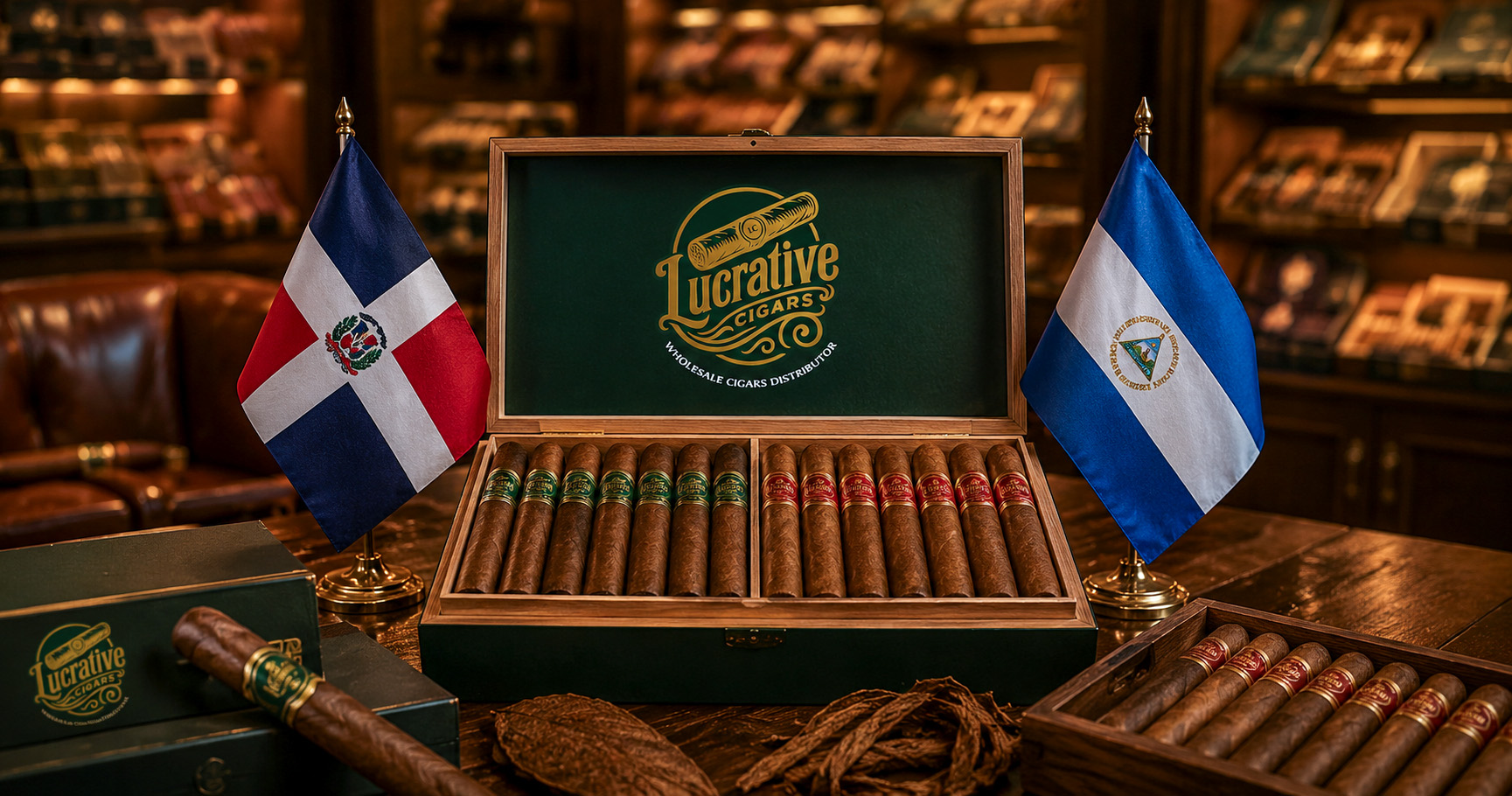
Dominican vs Nicaraguan Cigars: How Retailers Should Balance Wholesale Inventory
One of the most common assortment questions retailers ask is whether Dominican or Nicaraguan cigars deserve more humidor space.
The better question is usually not which origin is better, but how each supports customer demand.
For independent retailers, lounges, cigar clubs, and liquor stores, origin mix can influence everything from repeat purchase behavior to average ticket size. It can also shape how approachable or enthusiast-oriented a humidor feels.
That matters.
Many smaller wholesale buyers do not have the inventory depth to overstock both categories indiscriminately — every facings decision matters. Every SKU needs a role.
This is where assortment planning becomes more important than preference.
Dominican cigars often support broad consumer accessibility and gifting demand. Nicaraguan cigars often attract enthusiasts and repeat buyers seeking richer, more assertive profiles. Strong humidors frequently need both.
For smaller retailers buying through wholesale distribution, the goal is often not choosing between origins, but balancing them intelligently. This article explores how each origin tends to perform at retail, how origin diversity can support stronger merchandising, and how distributors can help smaller buyers test demand without overcommitting inventory.
Dominican cigars often support broader mainstream appeal.
Dominican cigars are often associated with balance, refinement, and approachable flavor. That broad appeal matters in retail.
Many customers entering premium cigars — occasional smokers, and gift purchasers — often gravitate toward smoother, more accessible profiles. That can make Dominican selections important contributors to turnover.
Brands with Dominican roots have often built reputations around consistency and elegance, which can support strong repeat purchasing. For retailers serving broad demographics, these products often help reduce purchase friction.
That does not mean all Dominican cigars are mild. Far from it. It means many Dominican offerings support broader entry-level and mid-market appeal, which can matter when humidor inventory needs dependable movement.
For smaller wholesale buyers, Dominican inventory often serves as part of a foundational assortment. It frequently earns shelf space through versatility.
Nicaraguan cigars often attract enthusiasts and repeat buyers.
Nicaraguan cigars often appeal for different reasons. They are frequently associated with richer flavor, fuller body, spice, and intensity — though individual blends vary considerably.
For experienced smokers, that can drive loyalty. And loyalty drives repeat sales.
Lounges and enthusiast-oriented retailers often see strong demand in this category because seasoned smokers may actively seek Nicaraguan-origin products. Brands like Plasencia, My Father, and AJ Fernandez have built strong enthusiast followings on the strength of Nicaraguan-origin tobacco.
These selections can also support premium price points. That matters from a margin perspective. For many retailers, Nicaraguan cigars often function as both enthusiast anchors and premium upsell opportunities. They may not always produce the broadest first-time appeal, but they often support higher-value purchasing.
A humidor heavily weighted only toward mild, approachable profiles may miss that opportunity. Balance matters — and for many retailers, Nicaraguan inventory supports that balance.
Smart humidors are often stocked by demand tier.
For many retailers, the strongest answer is not choosing Dominican or Nicaraguan cigars. It is stocking both intentionally. A practical model is built around good-better-best tiers.
Entry Tier
Approachable Dominican and softer-profile Nicaraguan selections that serve new smokers, occasional buyers, and gift purchases.
Mid Tier
Recognized premium brands across both origins — such as Oliva and Montecristo — that support broad appeal and dependable repeat movement.
Premium Tier
Higher-end enthusiast selections for upsell and loyalty, including full-bodied Nicaraguan lines from brands like Arturo Fuente and Plasencia.
This framework allows origin diversity while supporting price segmentation. That can improve both turns and average ticket size. It also makes smaller humidors feel deeper than they are.
For smaller wholesale buyers, distributors often make this easier through mixed assortment purchasing that would be difficult through single-manufacturer direct relationships. For a complete brand-by-brand framework, see our guide on Top-Rated Cigar Brands Every Retailer Should Stock.
Cigar origin diversity supports education-driven selling.
One often-overlooked advantage of carrying both origins is education-driven selling. Comparative conversations help sell cigars.
When staff can help customers understand differences in origin, body, and flavor expectations, shopping becomes an engaging experience. And engagement often increases basket size. A customer buying one cigar may leave with three when the conversation expands into exploration.
That matters especially for lounges and specialty retailers. Origin comparisons also create natural merchandising opportunities:
- Dominican vs Nicaraguan sampler sets
- Staff recommendation pairings
- Entry-versus-enthusiast comparison displays
- Flight-style educational assortments
Those can drive both trial and repeat purchasing — and differentiate your shop from purely transactional competitors.
Wholesale cigar distributors can help retailers test origin demand without overstocking.
This is where distribution can become strategically valuable. Smaller retailers often hesitate to broaden origin representation because they fear overcommitting inventory. That concern is legitimate — but distributor models can often reduce that risk.
Mixed-case flexibility, broader brand access, and lower minimums may allow retailers to test demand for Dominican and Nicaraguan products without tying up capital too heavily. That can be particularly useful for:
- New humidor programs
- Liquor stores expanding into premium cigars
- Lounges refining assortment strategy
- Cigar clubs curating member offerings
Rather than guessing which origin deserves more space, retailers can let demand data guide allocation. That is stronger merchandising — and often stronger economics. Browse our premium wholesale cigar catalog.
Practical Application
Review your humidor by origin. Assess:
- Sales mix by country of origin
- Average ticket by origin category
- Repeat purchase behavior
- Price-point performance
- Strength-profile demand
Then evaluate whether your allocation reflects actual demand. For many retailers, modest shifts in origin balance can improve both turns and customer engagement. Sometimes the opportunity is not to add inventory — it is to rebalance it.
Retailers rarely need to choose between Dominican and Nicaraguan cigars. They need the right balance. Dominican selections often support mainstream accessibility and dependable turnover. Nicaraguan selections often support enthusiast demand and premium upsell. Together, they often create stronger assortments than either alone.
For smaller retailers, lounges, and cigar clubs, wholesale distribution can provide the flexibility to build that balance without overcommitting inventory. Need access to premium wholesale cigars without manufacturer minimums? Contact Lucrative Cigars, become a dealer today, and apply now.
5 Key Takeaways
- Dominican cigars often support broad mainstream demand.
- Nicaraguan cigars often drive enthusiast loyalty and upsell.
- Balanced origin mixes often outperform narrow assortments.
- Origin education can increase engagement and basket size.
- Distributors can help smaller retailers test demand without overstocking.
FAQs About Dominican vs Nicaraguan Cigars
What sells better, Dominican or Nicaraguan cigars?
It depends on your customer base. Retailers serving broader demographics — including gift buyers and new smokers — often see stronger Dominican turnover due to the approachable flavor profiles. Enthusiast-oriented shops and lounges frequently report stronger Nicaraguan demand. Most successful retailers carry both and let their own sell-through data guide allocation.
Should lounges stock more Nicaraguan cigars?
Enthusiast-heavy environments generally benefit from deeper Nicaraguan representation, as seasoned smokers actively seek out richer, fuller-bodied profiles. However, lounges that also serve occasional and social smokers should still maintain a Dominican or approachable mid-range tier to serve the full range of their clientele.
Are Dominican cigars better for new smokers?
Many approachable Dominican blends appeal strongly to newer premium cigar buyers due to their smoother, more refined profiles. That said, softer Nicaraguan offerings can also work well for beginners. The key is matching strength profile and flavor expectations to the customer's experience level, regardless of origin.
Can smaller retailers test both origins without overbuying?
Yes. Wholesale distributors like Lucrative Cigars offer mixed-case flexibility and lower minimum order quantities, allowing smaller retailers to carry both Dominican and Nicaraguan selections without tying up capital in large single-origin commitments. This approach lets demand data — rather than guesswork — guide long-term allocation decisions.
How often should retailers review origin mix?
Monthly or quarterly reviews are practical for most humidor programs. Track sales by origin, average ticket per category, and repeat purchase behavior. If one origin is consistently underperforming relative to its shelf space, reallocate rather than adding more SKUs — improving the mix often matters more than expanding it.
Does origin matter more than brand when building a humidor?
For most retailers, brand recognition drives initial purchase decisions more than origin. However, origin becomes increasingly important as customers develop preferences and begin seeking specific flavor profiles. A well-structured humidor uses familiar brands as anchors while using origin diversity to support exploration and upsell at the enthusiast tier.