Best-Selling Cigars for Retail Stores: Inventory That Drives Turns and Margins
Best-Selling Cigars for Retail Stores: Inventory That Drives Turns and Margins
For independent tobacconists, liquor stores, cigar lounges, and clubs, success in premium cigars often has less to do with carrying the most famous labels and more to do with carrying products that actually move.
That distinction matters.
Many smaller retailers do not buy in large enough volumes to purchase directly from cigar manufacturers. That makes wholesale distributors critical — not simply as fulfillment partners, but as inventory strategy partners.
The best-selling cigars for retail stores typically combine strong consumer recognition, dependable turnover, approachable price points, and broad smoking appeal. The strongest-performing humidors are rarely built on rare allocations or trend chasing alone. They are built on assortment discipline.
This matters even more when capital is limited. Every SKU occupying humidor space has to earn its place.
This guide explores what tends to move fastest, how smaller retailers can build profitable inventory mixes through distribution, and why turnover often matters more than chasing the lowest factory-direct cost.
Brand familiarity usually drives first-turn performance.
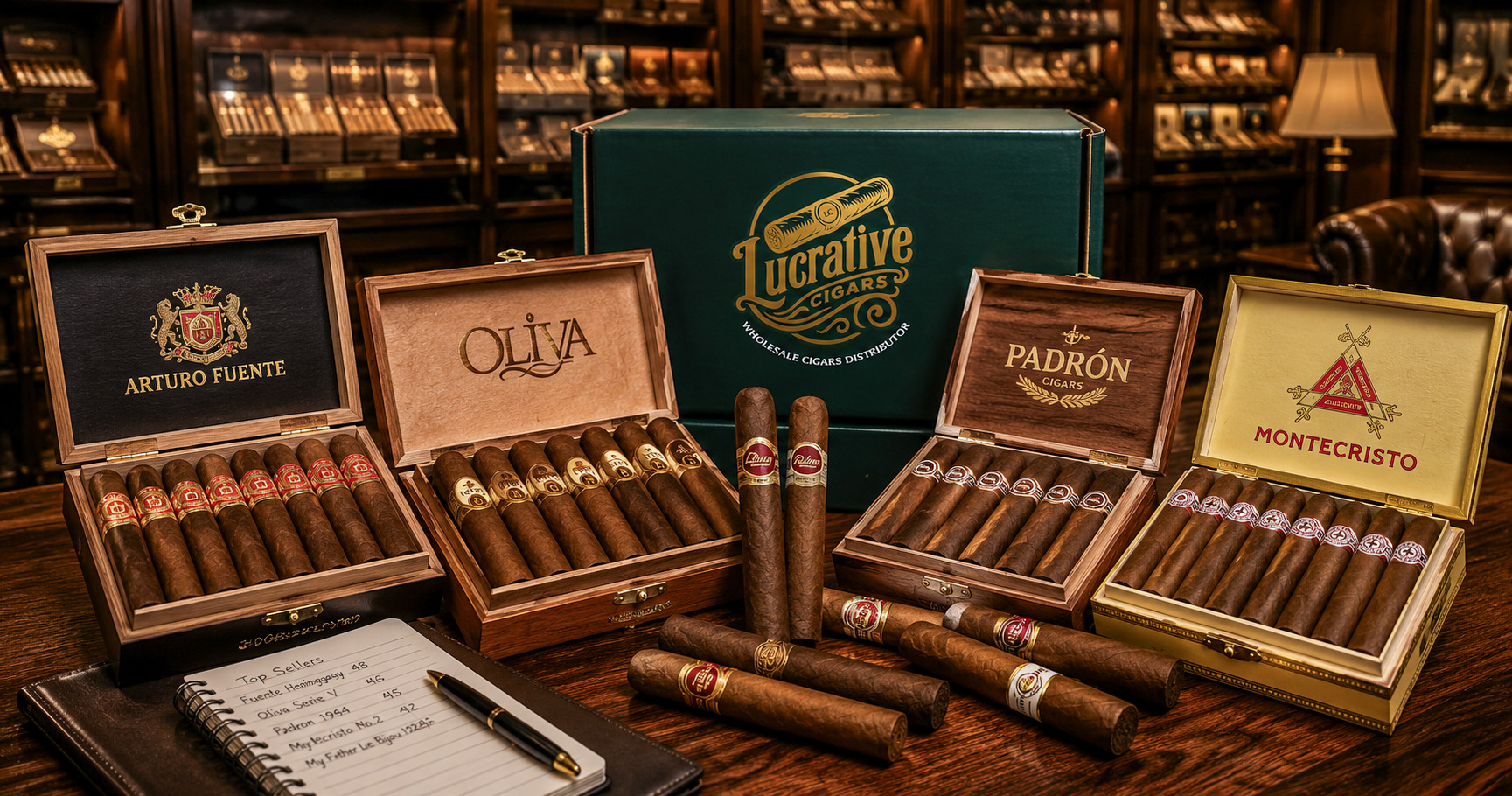
Well-known brands often outperform lesser-known alternatives by reducing purchase hesitation. Names like Arturo Fuente, Oliva, Padrón, Montecristo, and My Father often generate confidence before the first cut is made.
For retailers, these brands frequently serve as anchor inventory. They may not deliver the highest margin percentage on every stick, but they often generate consistent repeat movement.
That consistency matters.
A humidor built entirely around boutique or obscure labels may impress enthusiasts, but can underperform commercially. In contrast, familiar brands often attract both seasoned smokers and occasional buyers.
For smaller wholesale buyers, distributor relationships often make access to these proven brands easier through mixed-box purchases, curated assortment programs, or lower minimum order quantities than direct manufacturer channels.
Browse our premium wholesale cigar catalog.
Formats matter almost as much as brands.
Boxes carry prestige, but samplers, bundles, and smaller-format packs often outperform expectations.
This is especially true in liquor stores, gift-oriented retail environments, and newer cigar programs.
Samplers can lower trial resistance. Bundles can support value-driven buyers. Smaller pack formats often encourage impulse purchases.
Retailers that balance formats often outperform those overly dependent on traditional box inventory. This also helps smaller retailers avoid tying up working capital too heavily in slower-moving full-box positions.
Distributors often create flexibility here that smaller retailers cannot get by buying directly. For a deeper look at how cigar shops build their inventory mix, see our guide on How Retailers Can Choose the Right Cigar Distributor.
Mild-to-medium profiles often outperform niche strength extremes.
Experienced smokers may chase stronger profiles, but broad retail demand often centers around approachable flavor.
Mild-to-medium-bodied cigars often perform well because they appeal to a wide range of experience levels. They support gifting, trial purchases, and broader demographic appeal.
That does not mean stronger cigars should be ignored. It means shelf allocation should reflect demand, not enthusiast bias.
Many successful humidors are built around accessible core profiles, using fuller-bodied selections to support premium upsell. That balance often improves both turns and ticket size.
Why smaller retailers often benefit from distributor buying models.
Some independent retailers assume that direct manufacturer buying automatically creates better economics. Often, that is incomplete thinking.
Distributor models can offer:
- Lower minimum order requirements
- Broader assortment access across cigar boxes, tins, and accessories
- Mixed-case flexibility
- Reduced inventory concentration risk
- Cash-flow efficiency
For many smaller-volume buyers, those advantages can outweigh nominal differences in direct pricing. Inventory that turns faster often matters more than theoretical savings on slower-moving stock. That is a margin conversation, not just a cost conversation.
Practical Application
Audit your current humidor turns. Identify your top five movers. Compare them by price point, strength profile, format, gross margin, and turn velocity. Then reallocate shelf space toward proven repeat demand.
For many retailers, improving profitability does not require adding more SKUs. It requires improving the mix.
Best-selling cigars for retail stores are rarely accidental. They reflect disciplined assortment planning, trusted brands, flexible sourcing, and merchandising built around repeat demand.
For smaller retailers, lounges, and cigar clubs that do not buy at factory-direct volumes, wholesale distribution can provide both inventory access and buying flexibility. Need access to premium wholesale cigars without manufacturer minimums? Contact Lucrative Cigars, become a dealer today, and apply now.
5 Key Takeaways
- Familiar premium brands often drive the fastest turns.
- Format diversity supports broader buyer missions.
- Mild-to-medium profiles often outperform niche extremes.
- Distributor buying models can improve inventory flexibility.
- Turnover often matters more than theoretical markup.
FAQs About Best-Selling Cigars for Retail Stores
What cigar brands sell fastest in retail stores?
Established premium brands with strong consumer recognition — such as Arturo Fuente, Oliva, Montecristo, and Romeo y Julieta — consistently lead in retail turnover due to their broad demographic appeal and repeat purchase behavior.
Should retailers stock more boxes or samplers?
Most benefit from carrying both. Full boxes serve your repeat customers and enthusiasts, while samplers and bundles drive gifting purchases, first-time buyers, and impulse sales. A balanced format mix typically improves overall turns and average transaction value.
Can smaller retailers buy premium cigars wholesale without buying directly from manufacturers?
Yes. Many independent retailers use wholesale distributors like Lucrative Cigars to access premium inventory without meeting manufacturer minimum order requirements. Distributors also offer mixed-case flexibility and broader assortment access.
What strength profiles sell best in a general retail setting?
Mild-to-medium-bodied cigars typically outperform in broader retail environments because they appeal to beginners, gift buyers, and occasional smokers. Full-bodied lines should still be stocked for enthusiasts, but shelf allocation should reflect actual demand.
How do I know which cigars to prioritize in my humidor?
Track your top five movers by turn velocity, gross margin, and format. Reallocate humidor space toward products with the strongest repeat demand. Consistent turnover on familiar brands usually matters more than chasing high-markup items that sit for weeks.
How often should a retailer refresh their cigar inventory mix?
A monthly review of sell-through data helps identify slow movers early. Swap underperformers seasonally and introduce one or two new lines per quarter to keep regulars engaged without overcommitting capital to untested SKUs.